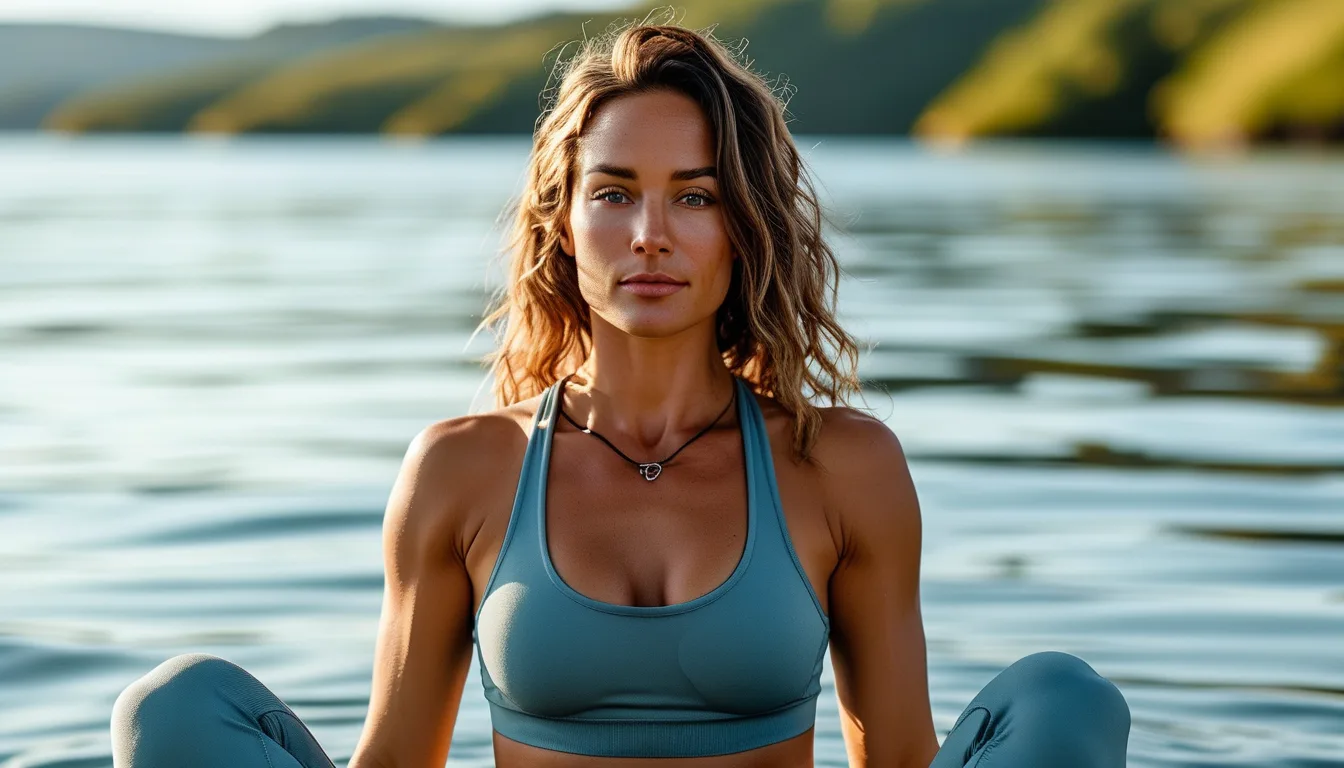
Why Your Board Feels Tippier at the End of a SUP Yoga Session
Quick Answer: Boards feel tippier late in a session for three compounding reasons: your stabilising muscles fatigue faster than your big movers, your board pressure drops as air cools or warms, and afternoon wind and boat wake build while you practise. The board is the same. Your correction speed and the water are not.
First ten minutes: solid.
Last ten minutes: every transition is a wobble.
All three causes are fixable, and only one of them is fitness.
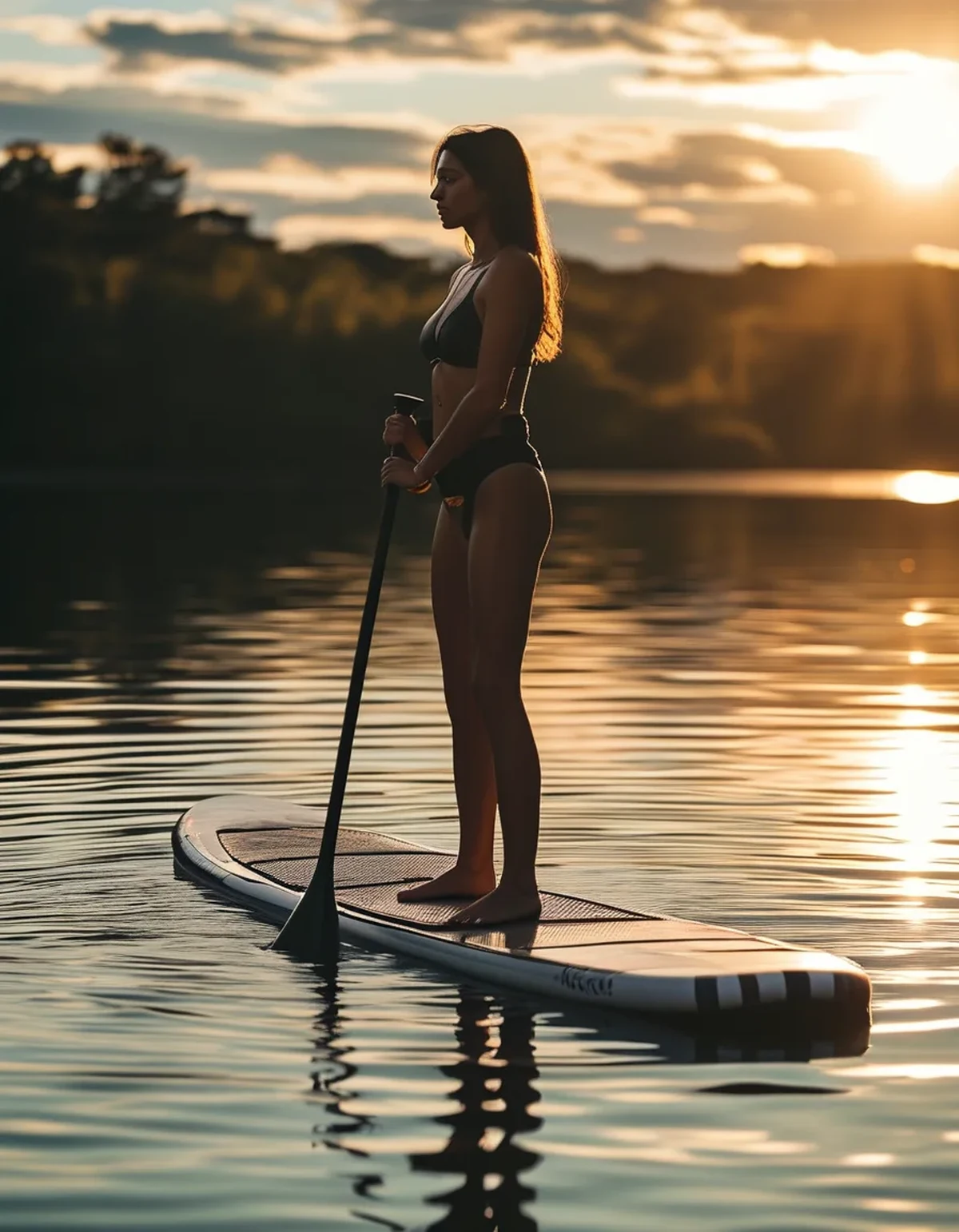
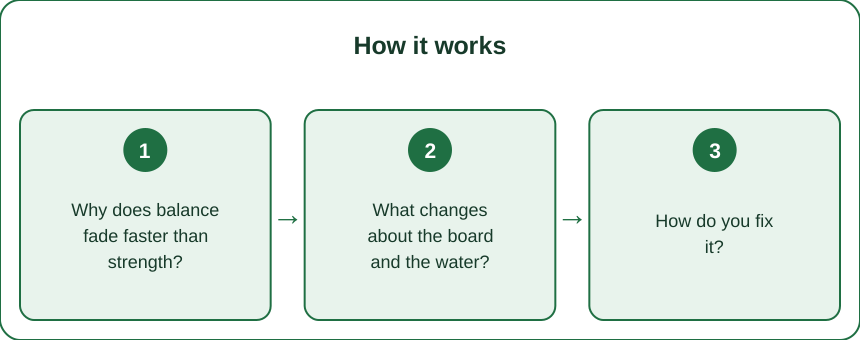
Why does balance fade faster than strength?
Because balance is a speed problem, not a strength problem.
Stabilisers fatigue on a different curve. The deep muscles around your ankles, hips and spine work continuously through a session, with no rest phases. Your quads get a break every time you change pose. Your ankle stabilisers never do.
Fatigue slows correction, not strength. Balance is a loop: sense the drift, correct it. Fatigue lengthens the delay in that loop by tens of milliseconds. On land, nobody notices. On a board, a slightly later correction means a bigger correction, which creates the overcorrection wobble that feels like the board misbehaving.
Proprioception dulls with repeated loading. The sensors in your joints get less precise as a session goes on, so you are reading the board’s movement later as well as reacting later.
Grip and forearm fatigue matters more than you expect. Anything involving the hands — plank, downward dog, transitions through the hands — loses fine control late in a session, and hand pressure is a major steering input on a board.
Core endurance sets your ceiling. Not core strength. The ability to hold low-level tension for 45 to 60 minutes is a different quality from being able to hold a hard plank for a minute, and it is the one that decides how the last ten minutes go.
And the honest one: concentration fades. Balance on water is heavily attentional, and by the end of a session the mind wanders. A wandering mind is a slower correction loop.
What changes about the board and the water?
Six environmental factors that shift within a single session.
Board pressure changes with temperature. Inflatable boards lose noticeable pressure when the air cools, and pressure is what makes a board stiff. A board pumped to 15 PSI in warm morning sun can drop meaningfully by a cool evening, and a softer board flexes underfoot in a way that reads as tippiness. Check pressure before an evening session rather than trusting the morning pump.
Water surface roughens through the afternoon. Thermal winds typically build from late morning, peak mid-to-late afternoon and drop near sunset. If you started at 4pm, the water at 5pm is genuinely different.
Boat and jet-ski traffic peaks with the afternoon. Wake that was absent at 9am arrives in sets later in the day, and wake sets are the single most common cause of a late-session fall.
Anchor line tension changes with wind shifts. If you are anchored, a shift in wind direction changes how the board sits relative to the chop, which alters everything about how stable each pose feels.
Your position on the board drifts. People slowly migrate off centre through a session without noticing. Even a small shift toward the nose or a rail measurably reduces stability.
Glassy water is harder than slightly textured water, counterintuitively — with no surface reference, your eyes get less information about how the board is moving. Late-day glass-off can feel tippier than the mild chop that preceded it.
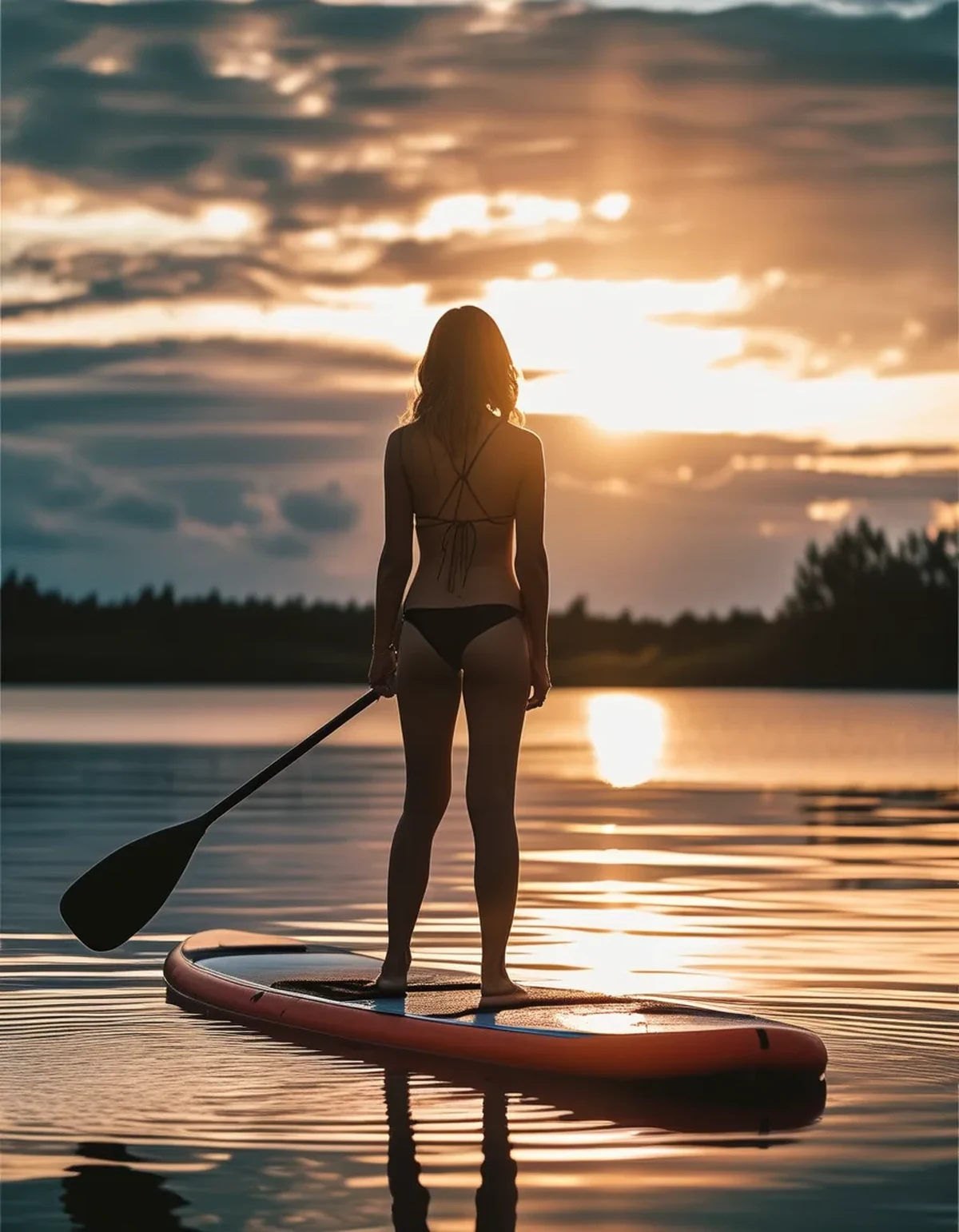
How do you fix it?
Six adjustments, roughly in order of effect.
Sequence the hardest balance work early. Put your standing poses and any inversions in the first third, not the last. Traditional land sequencing that builds to a peak pose works badly on water, where your balance is at its best at the start.
Reset your position between poses. Look down, find the carry handle, and re-centre. Ten seconds every few poses eliminates the slow drift that accumulates.
Check board pressure for the conditions you will actually be in. Inflate to the manufacturer’s recommended maximum before a cool-evening session, and re-check on cold mornings.
Train unilateral ankle endurance on land. Single-leg balance holds, 3 sets of 45 seconds per side, ideally on a slightly unstable surface, twice a week. This trains the specific endurance quality that fails, rather than general strength.
Widen your base as you tire, deliberately. Feet wider than hips, gaze on a fixed point on shore rather than down at the board. A fixed distant reference stabilises the correction loop far better than looking at your feet.
Schedule around the wind. Early morning and the hour before sunset are typically the calmest windows. In late summer, thermal winds are strong and predictable enough that shifting a session by 90 minutes changes the practice completely.
Seasonal note: as autumn approaches, mornings get colder while afternoon water stays warm, which widens the temperature swing across a single day — and therefore the pressure swing in an inflatable board. Late-season sessions need a pressure check more often than mid-summer ones.
What Nobody Tells You About SUP Yoga Balance
Nobody tells you the board is a fitness test of endurance, not strength. People arrive strong from land practice and are surprised by how quickly the last ten minutes deteriorate. Continuous low-level stabiliser work for an hour is an unfamiliar demand.
Nobody tells you where to look. Gaze is the single biggest free improvement available. A fixed point on the shore beats looking at the board, and looking at the water directly is the worst option of all, because moving water gives your visual system false motion information.
Nobody tells you that glassy water can be harder. Perfect glass removes your visual reference for board movement. Slight texture actually helps you read what the board is doing.
Nobody tells you your breath is a balance input. A held breath stiffens the whole system and makes corrections abrupt. Continuous breathing keeps corrections small and early, which is exactly what you need late in a session.
Nobody tells you the fin matters. A larger fin tracks straighter and resists the small rotational drifts that make a board feel unsettled. Many people practise with the small fin that came in the box.
Nobody tells you to plan for wake. When you hear a boat, come to a low, wide, stable position and wait. The wake arrives roughly 20 to 40 seconds after the sound, and trying to hold a standing pose through it is how most falls happen.
FAQ: SUP Yoga Balance Questions, Answered
Why does the board feel less stable at the end?
Stabiliser fatigue slows your correction loop, board pressure often drops as air cools, and afternoon wind and wake build while you practise.
What pressure should my board be?
Check the manufacturer’s rating — commonly 12 to 15 PSI. Inflate to the upper end for cool conditions, since pressure falls as temperature drops.
Where should I look during balance poses?
A fixed point on shore. Not the board, and definitely not the moving water.
What is the best time of day to practise?
Early morning or the hour before sunset, when thermal winds are lightest.
How do I train for it on land?
Single-leg balance holds, 3 sets of 45 seconds each side, twice a week, ideally on a cushion or folded mat.
What do I do when a boat passes?
Drop to a low, wide position — table top or seated — and wait. Wake arrives 20 to 40 seconds after you hear the engine.
Should I put the hard poses at the end like a land class?
No. Reverse it. Your balance is best in the first third, so put standing poses and inversions there.
TL;DR:
- Stabilisers fatigue faster than big muscles, and fatigue slows your correction loop rather than weakening it.
- Board pressure drops as air cools — check before evening and late-season sessions.
- Afternoon wind and boat wake build through the day; morning and pre-sunset are calmest.
- Put the hardest balance poses in the first third, not the end.
- Gaze at a fixed point on shore, re-centre every few poses, and drop low when you hear a boat.
Next session, flip your sequence so the standing work comes first. It is the single change that makes the most difference.
See It in Motion
Seen here: High Waist Printed Bootcut Yoga Pants with Pockets — shop it on bubblelime.com
Keep Reading
This article is for general informational and styling purposes only. Fit, sizing, and product availability may vary.