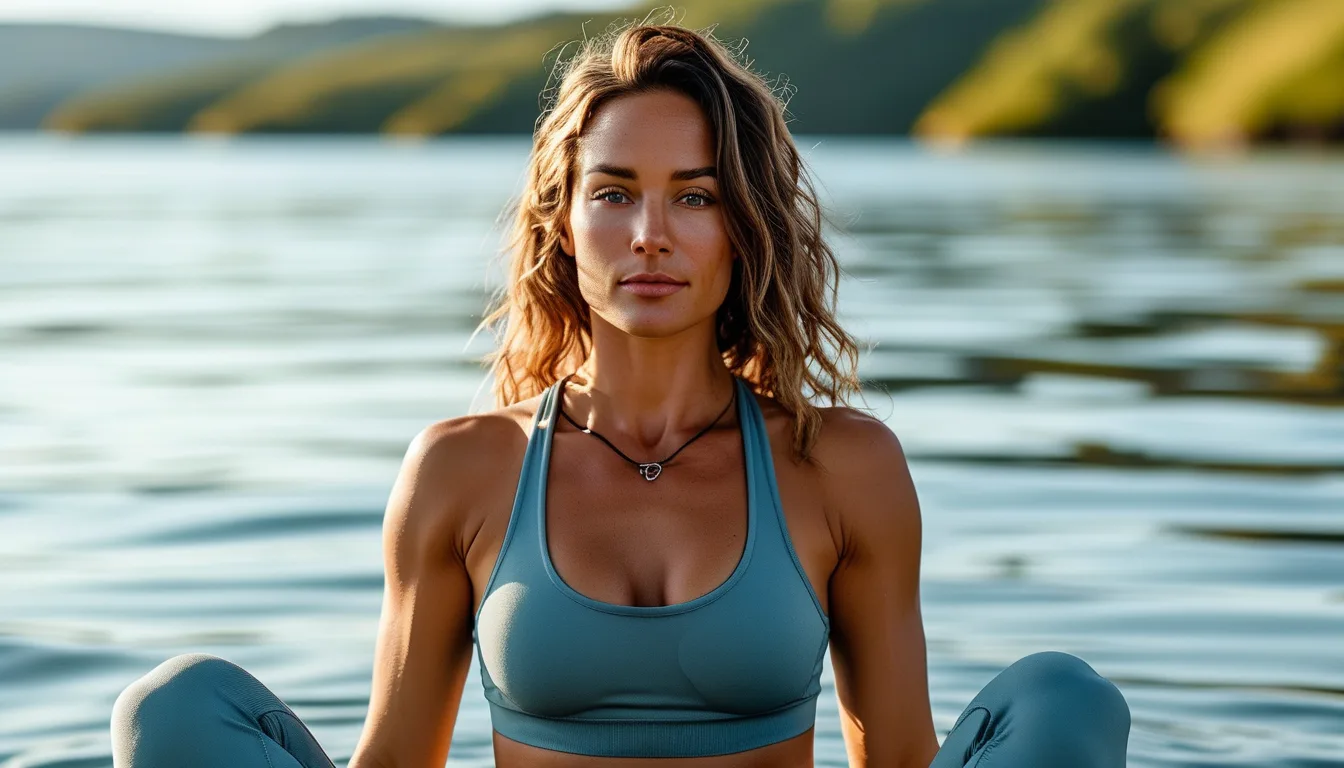
Why SUP Yoga Gets Harder When the Water Gets Glassy
Quick Answer: Balance uses vision, inner ear, and body sense together. Glassy water removes the visual texture your eyes normally use to detect small movements, so your brain leans harder on the other two systems - and the mirror surface can also produce mild visual conflict as reflections move with the board. The fix is a fixed land reference. Pick a point on shore and hold it; the board stops feeling unpredictable within a minute.
Flat water is not easier water.
It is water with less information in it.
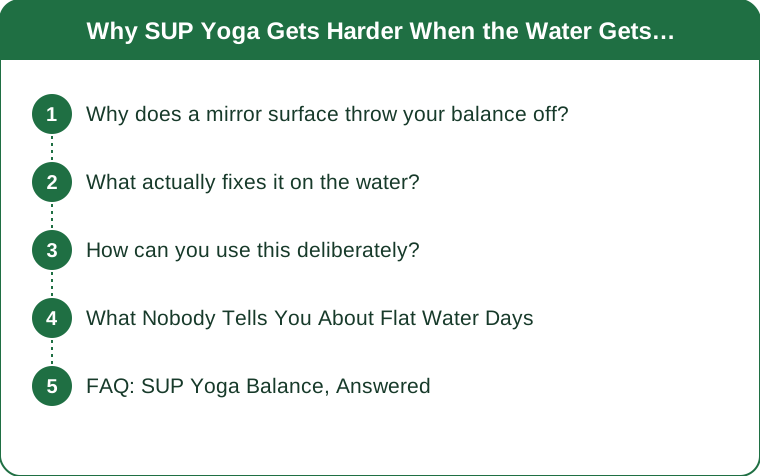
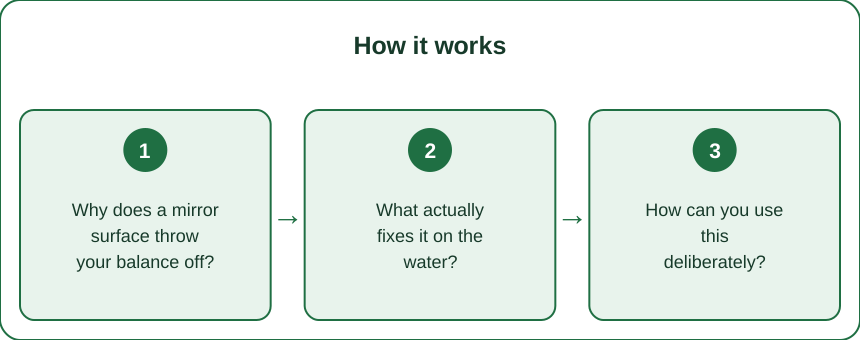
Why does a mirror surface throw your balance off?
Because balance is largely a visual task, and a mirror gives your eyes ambiguous data.
Vision provides a large share of balance information. You detect drift by watching the relationship between yourself and stable features around you. Remove the features and you remove a chunk of the input.
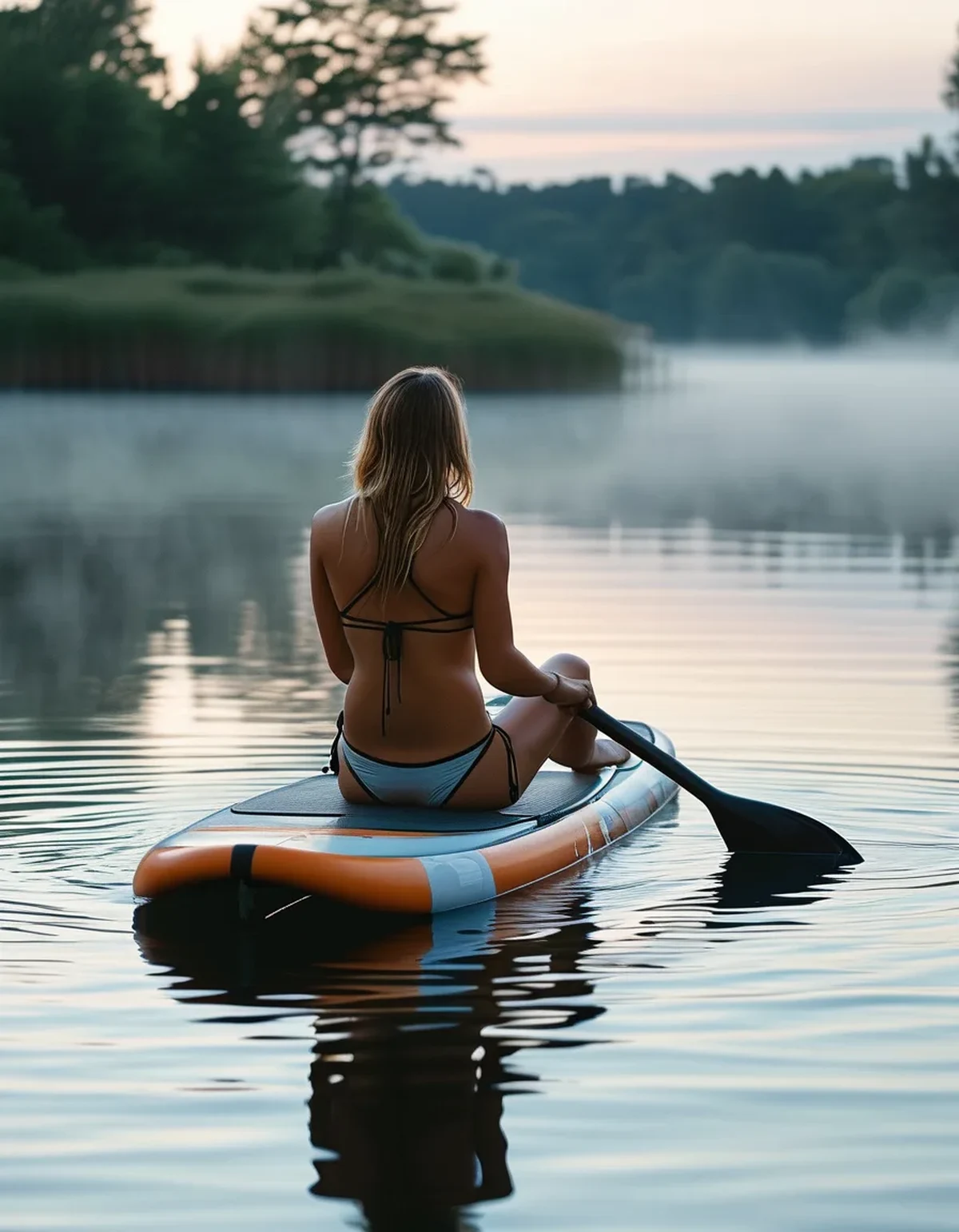
Glassy water has almost no texture. Ripples, chop, and wind lines all give your eyes reference points. A mirror-flat surface gives them a moving reflection instead - which shifts as the board shifts, so it moves with you rather than staying put.
Reflected sky is the worst case. Looking down at reflected clouds means looking at a moving image on a moving surface, from a moving body. Your visual system gets no anchor at all.
Which forces a rapid handover to the other systems. Your inner ear and your body’s position sense have to take up the slack, and they are slower and less precise for fine corrections. That handover feels exactly like getting worse at balancing.
And the wobble it produces is self-feeding. A correction based on poor information tends to overshoot, which makes the board move more, which makes the reflection move more.
What actually fixes it on the water?
A fixed reference on land, plus a change in where you look.
Choose a stationary object on shore before you start. A tree, a post, a building edge. A fixed land point restores the visual anchor immediately and is the single most effective adjustment.
Raise your gaze in standing poses. Looking down at the board or the water is the default and the worst option on glassy days. Horizon-height gaze on a fixed object is the standing-pose fix.
Do not look at reflections at all. They are the most compelling thing to look at and the least useful. Actively avoiding the reflection is a real technique, not just a suggestion.
Anchor near something visible. Practising near a dock, a moored buoy, or a shoreline gives you peripheral reference throughout. Open water in the middle of a flat lake is the hardest possible setup.
Use breath as a rhythm anchor. When visual input is poor, a steady breath rhythm reduces the tendency to make rapid over-corrections. Fast breathing and fast corrections travel together.
And accept a couple of minutes of adjustment. The handover between balance systems happens quickly once your brain has a reliable input. The first few minutes on glass are always the worst few minutes.
How can you use this deliberately?
Flat water turns out to be excellent training precisely because it is harder.
It is a low-visual-input drill. Practising when your eyes have less to work with strengthens the systems that matter when conditions change. This is why balance improves faster on the water than on a mat.
Progress the eyes, not the poses. Fixed land point, then soft focus, then briefly closed eyes in a stable seated or kneeling pose. Closed-eye work is where the biggest gains sit and it needs no more difficult a posture.
Alternate flat and textured days on purpose. A light chop gives your eyes plenty to work with and lets you push the poses; glass lets you push the balance system with easy poses. Two different sessions, not a good day and a bad day.
Keep the pose list short on glass days. Three or four positions held longer beats a full flowing sequence. Duration under poor visual input is the stimulus.
And notice how it transfers. People who train on flat water report standing poses on a mat feeling notably more stable - the mat has abundant visual reference, so it becomes the easy condition.
Water temperature is worth checking in late summer. Warm surface water is pleasant, but if you are practising into the evening as days shorten, the air cools faster than the water and a wet exit gets cold quickly. Bring a layer for after.
What Nobody Tells You About Flat Water Days
Everyone assumes flat means easy, so a bad flat-water session feels like a personal failure. It is not - it is the condition with the least visual information, and knowing that changes how you interpret the wobble entirely.
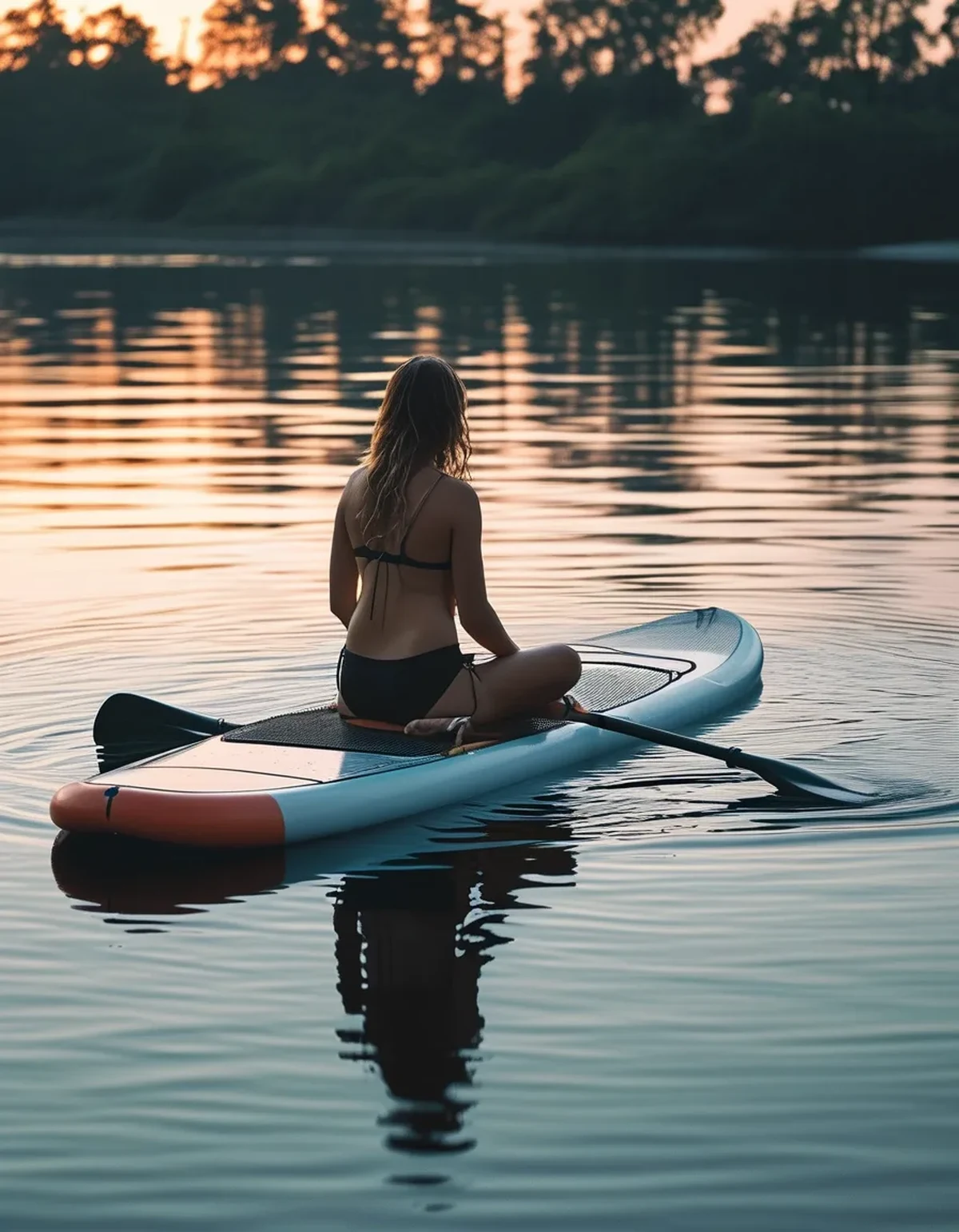
Early morning is both the flattest and the most reflective. Dawn sessions are beautiful and are the hardest visual condition you will practise in. If your dawn sessions feel worse than your afternoon ones, this is why.
Sunglasses can help more than expected. Polarised lenses cut surface glare and reflection, which reduces the moving-image problem. A polarised lens is a balance aid on glassy water.
Your fatigue level shows up here first. When you are tired, the handover to slower balance systems is slower still. A flat-water session is a surprisingly good readiness test.
Board position matters more on glass. Being slightly off-centre is harder to detect without visual cues, so people drift back on the board without noticing. Check your foot position against the handle every few poses.
And falling in is fine. Late-summer water is at its warmest right now, which makes this the best few weeks of the year to practise the poses you are actually afraid of. The cost of falling is lowest in August - use it.
FAQ: SUP Yoga Balance, Answered
Is choppy water actually easier for balance?
For visual reference, yes - texture gives your eyes something to track. Light chop is often the easiest condition for holding a pose, even though it feels less inviting. Real chop is a different matter and makes everything harder.
Where should I look in standing poses?
A fixed point on land at roughly horizon height. Never at the board and never at a reflection. If there is no land in view, anything stationary - an anchored buoy, a moored boat - does the same job.
Why do I balance better with the anchor down?
Partly because the board moves less, and partly because a taut anchor line gives you a visible fixed reference in your lower field of view. The line itself is doing some of the work your eyes were missing.
TL;DR:
- Glassy water removes visual texture, so your brain hands balance to slower systems - that handover feels like wobbling.
- Moving reflections make it worse by giving your eyes a shifting image on a shifting surface.
- Fix it with a fixed point on land at horizon height, and never look at the reflection.
- Polarised sunglasses genuinely help by cutting surface reflection.
- Use flat days as balance training with fewer poses held longer, not as failed flow sessions.
Next glassy morning, pick your land point before you leave the dock. It changes the whole session.
See It in Motion
Seen here: High Waist Printed Bootcut Yoga Pants with Pockets — shop it on bubblelime.com
Keep Reading
This article is for general informational and styling purposes only. Fit, sizing, and product availability may vary.