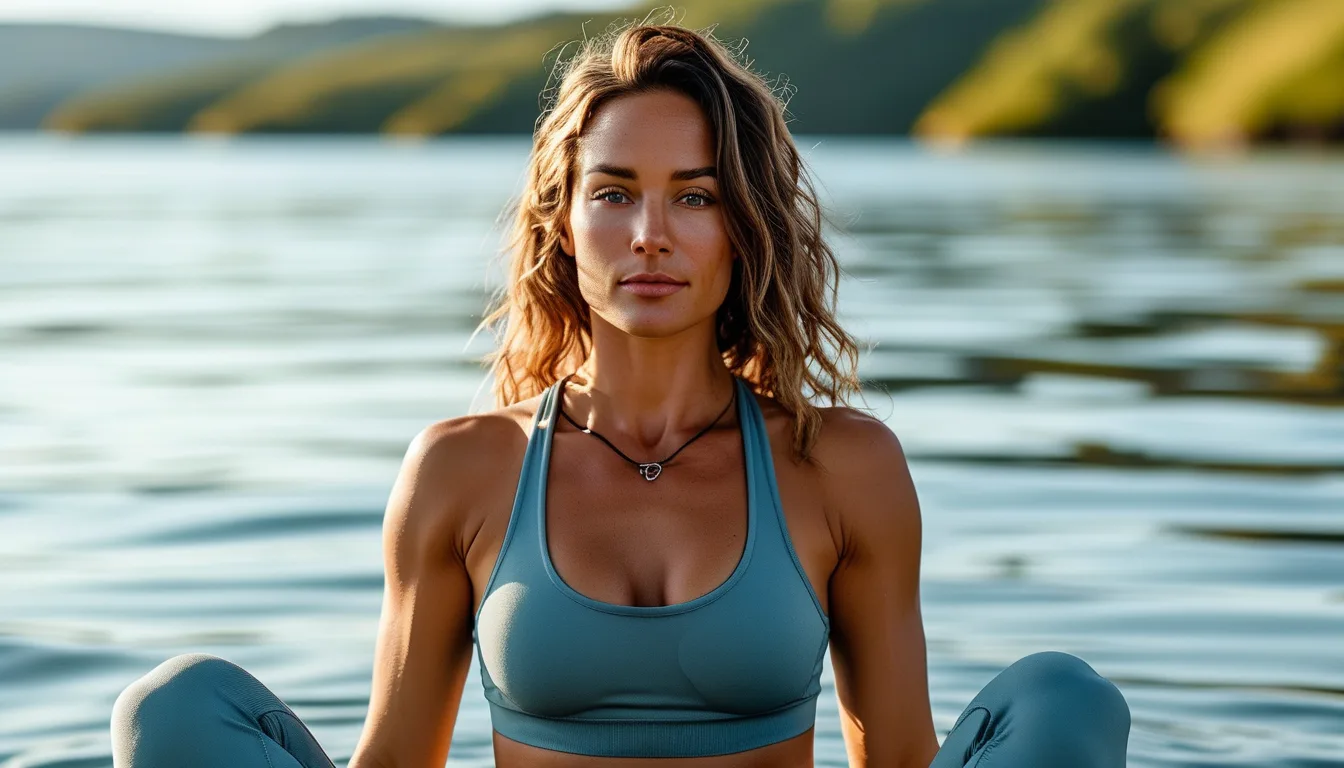
Why Stand-Up Paddleboard Yoga Improves Your Mat Practice
Quick Answer: An unstable surface removes the ability to compensate with the floor. Weight shifts you can’t feel on a mat produce immediate, visible feedback on a board, so alignment errors surface within seconds. The result is better proprioception, more honest weight distribution, and stronger stabilizers — all of which transfer directly back to your mat practice.
You’ve held tree pose for years. On a board, you fall out in four seconds. That’s not a step backwards — it’s the first accurate feedback you’ve had about how you were actually standing.
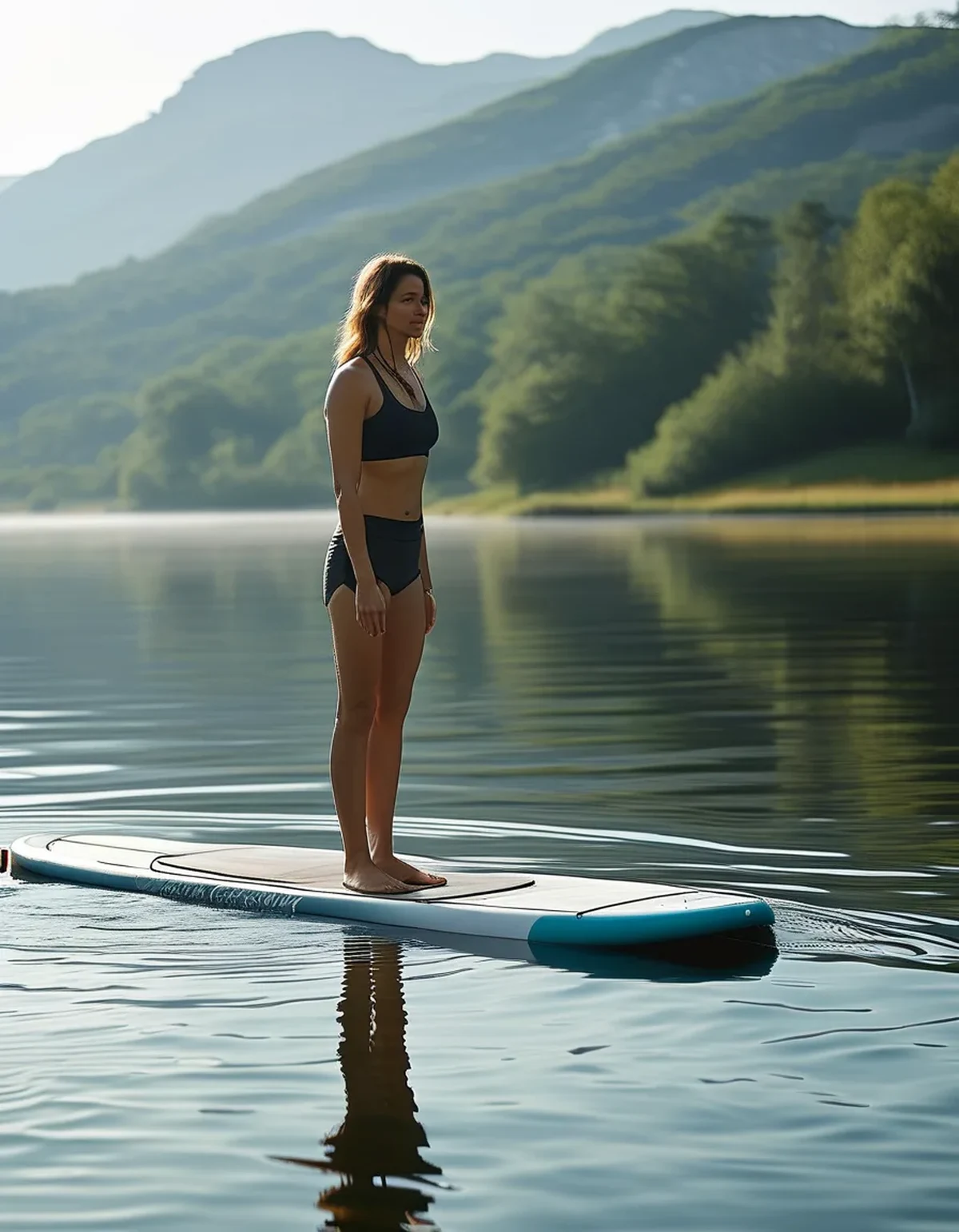
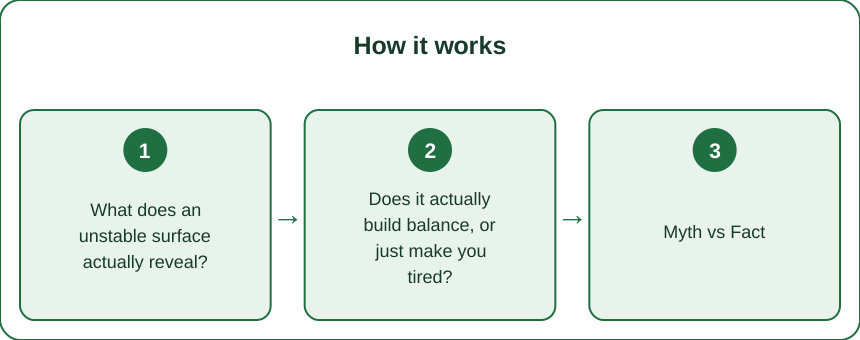
What does an unstable surface actually reveal?
Compensations, immediately and unambiguously.
On a solid floor, the surface absorbs error. You can stand with weight distributed unevenly across your foot, with your pelvis subtly rotated, or with your ribs flared, and the floor doesn’t care. The pose looks fine and feels fine.
A board translates every one of those into motion. Weight forward of center and the nose dips. Uneven left-right loading and it rolls. The feedback is instantaneous and proportional, which is exactly what motor learning requires.
Specifically, board work exposes:
- Weight sitting in the heel or the ball of the foot rather than distributed
- Asymmetric loading between left and right
- Reliance on gripping with the toes rather than using the whole foot
- Holding breath to create stability, which becomes obvious when the board reacts to each breath
The most common revelation is that a pose people considered solid was being held with a fixed brace rather than continuous small adjustment. Stability on a moving surface requires ongoing micro-correction — the ankle, hip, and trunk stabilizers working continuously rather than locking.
Does it actually build balance, or just make you tired?
Both, and the balance component is well supported.
Balance training on unstable surfaces has a substantial research base, primarily from ankle rehabilitation and fall-prevention literature. Consistent findings include improved postural control, faster stabilizer activation, and reduced sway.
The mechanism is proprioceptive. Balance is largely a nervous-system skill — the speed and accuracy with which your body senses position and corrects it. Training on a surface that constantly demands correction improves that loop.
Transfer to stable surfaces is real but partial. Some of the skill is board-specific. The proprioceptive and stabilizer improvements do carry over; the specific movement patterns don’t fully.
The fatigue is genuine too. Continuous micro-correction is metabolically costly. A 45-minute board session at poses you’d find easy on a mat is meaningfully harder, and the core and lower-leg work is substantial.
One useful side effect: breath control. Holding your breath destabilizes you on a board in a way you can feel, so it trains continuous breathing more effectively than a verbal cue from an instructor ever does.
Myth vs Fact: SUP Yoga
Myth: You need to be good at yoga first. Fact: Beginners often adapt faster, because they have fewer ingrained compensations to unlearn. Experienced practitioners sometimes struggle more precisely because their patterns are well-established.
Myth: Falling in means you’re doing it wrong. Fact: Falling is part of the practice and instructors expect it. If you never fall in, you’re likely not working near your actual balance limit. The skill is falling safely, not avoiding it.
Myth: You need your own board. Fact: Most classes provide boards, and yoga-specific boards are wider and more stable than touring boards. Buying one early is a common and expensive mistake.
Myth: It’s only for calm, flat water. Fact: Calm water is ideal for learning, but small ripples add useful challenge once you’re stable. What genuinely doesn’t work is chop, wind, and boat wake.
Myth: You’ll do the same sequence as a mat class. Fact: SUP sequences are modified — poses are held longer, transitions are slower, and high-risk balance poses appear far later. A board class is not a mat class on water.
Myth: It’s a gentle, easy version of yoga. Fact: It’s harder. Simple poses become demanding, and the core and stabilizer load through a full class is considerable.
How should a beginner start?
There’s a progression that works, and skipping ahead is the main source of frustration.
Session 1 — kneeling only. Get comfortable on the board on your knees. Cat-cow, child’s pose, kneeling twists. Learn how the board responds to weight shifts before standing.
Session 2 — seated and prone. Seated forward folds, cobra, sphinx, bridge. Low center of gravity, high feedback.
Session 3 — tabletop and downward dog. The first genuinely challenging positions, with four points of contact.
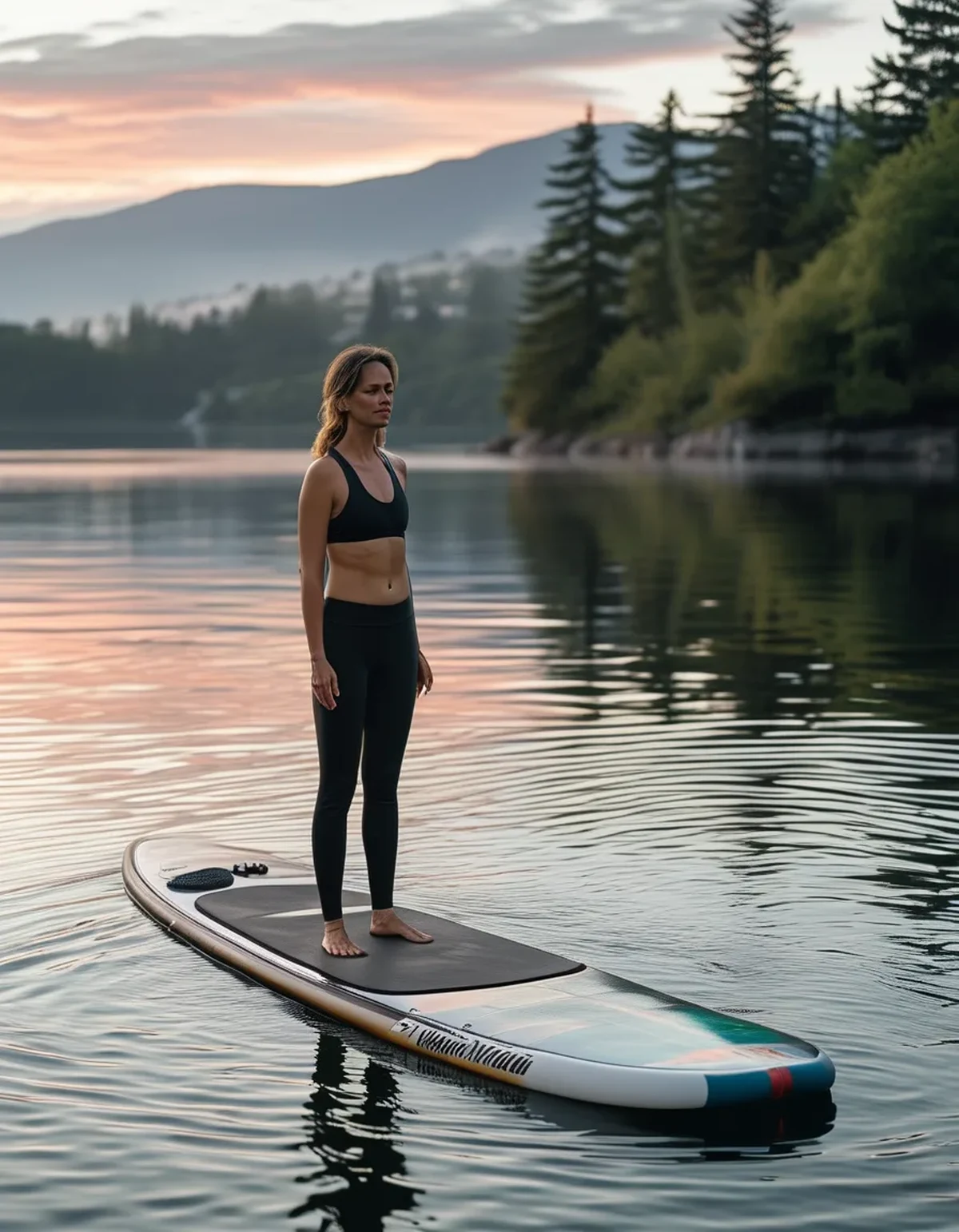
Session 4 onward — standing. Mountain, warrior II with a wide base, tree with the foot low on the calf rather than high on the thigh.
Key technical points throughout:
- Position over the widest part of the board, roughly at the center handle. Weight at the nose or tail destabilizes disproportionately.
- Keep hands and feet wider than you would on a mat. A wider base is the single biggest stability improvement available.
- Look at a fixed point on the horizon, not down at the board. Visual reference is a major contributor to balance and looking down removes it.
- Anchor in shallow, calm water away from boat traffic, and always wear or carry the appropriate flotation device for your location’s rules.
How does it change your mat practice?
In three specific ways that show up within a few sessions.
Weight distribution becomes conscious. After board work, standing poses on a mat feel different — you notice weight sitting in the heel because you’ve spent an hour getting immediate feedback about it. This is the most commonly reported carryover.
Breath stops being a brace. Board work punishes breath-holding, so it trains continuous breathing under effort. That habit persists on the mat.
Stabilizers get stronger. Ankle, hip, and deep trunk stabilizers work continuously on a board in a way they don’t on a floor. Poses that used to require concentration to hold get easier.
What doesn’t transfer: flexibility, strength in the primary movers, and complex arm balances. Board work is not a substitute for mat practice — it’s a diagnostic and a supplement.
A practical rhythm for anyone with access to water: one board session for every three or four mat sessions. That’s enough to keep surfacing compensations without displacing the strength and flexibility work that a stable surface does better.
And the falling-in part genuinely stops mattering after the second session. It’s water.
This is general information, not medical advice. Check local water safety rules and flotation requirements before paddling.
FAQ: SUP Yoga Questions, Answered
Do I need to know how to paddle?
Basic paddling to get to and from your anchor spot, yes. Most classes cover it in the first ten minutes and the distances involved are short. You don’t need paddling skill beyond that.
What should I wear?
Something you’re comfortable getting wet in — fitted activewear or swimwear under a rash guard. Avoid anything loose that could catch, and secure or leave behind anything you don’t want in the water. Sunglasses with a retainer strap, or none.
Is it safe if I’m not a strong swimmer?
With a properly fitted flotation device, in shallow calm water, with an instructor present — generally yes, and many programs accommodate weak swimmers. Be direct with the instructor about it beforehand so they can position you appropriately.
TL;DR:
- An unstable surface removes the floor’s ability to absorb your compensations, so alignment errors surface instantly.
- Progress kneeling → seated → tabletop → standing; widen your base and look at the horizon.
- Balance and stabilizer improvements transfer to the mat; flexibility and strength work don’t.
- One board session per three or four mat sessions is a useful ratio.
Falling out of tree pose in four seconds isn’t a regression. It’s the first honest feedback about a pose you’ve been holding slightly wrong for years — and that feedback is the whole point.
See It in Motion
Seen here: High Waist 8” Yoga Shorts — shop similar styles on bubblelime.com
Keep Reading
This article is for general informational and styling purposes only. Fit, sizing, and product availability may vary.