Why Balance Skills Learned on a Paddleboard Transfer to Regular Life Faster Than Mat-Based Balance Work
Balance practiced through poses held on a stable yoga mat can take months to noticeably improve, while balance practiced on a paddleboard over open water, on a surface that never actually holds still, can show real improvement within just a few sessions — and the difference comes down to what kind of balance challenge each surface is actually offering.
Why a Mat Only Tests Balance Within the Body Itself
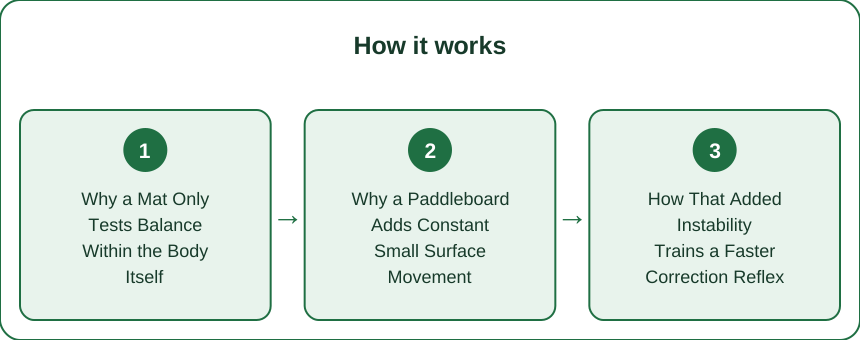
The limit: a-stable-yoga-mat-only-challenges-the-bodys-own-internal-balance-systems-since-the-surface-itself-never-moves-or-shifts-underneath-a-held-pose (a stable yoga mat only ever challenging the body’s own internal balance systems, since the actual surface underneath a held pose never moves or shifts on its own at any point, per the sup-yoga-benefits-for-balance-and-core-guide logic — a-stable-yoga-mat-only-challenging-the-bodys-own-internal-balance-systems-since-the-actual-surface-underneath-a-held-pose-never-moves-or-shifts-on-its-own), and the reframe (a mat isolating one half of a real balance challenge, and leaving the other half untrained)).

Why a Paddleboard Adds Constant Small Surface Movement
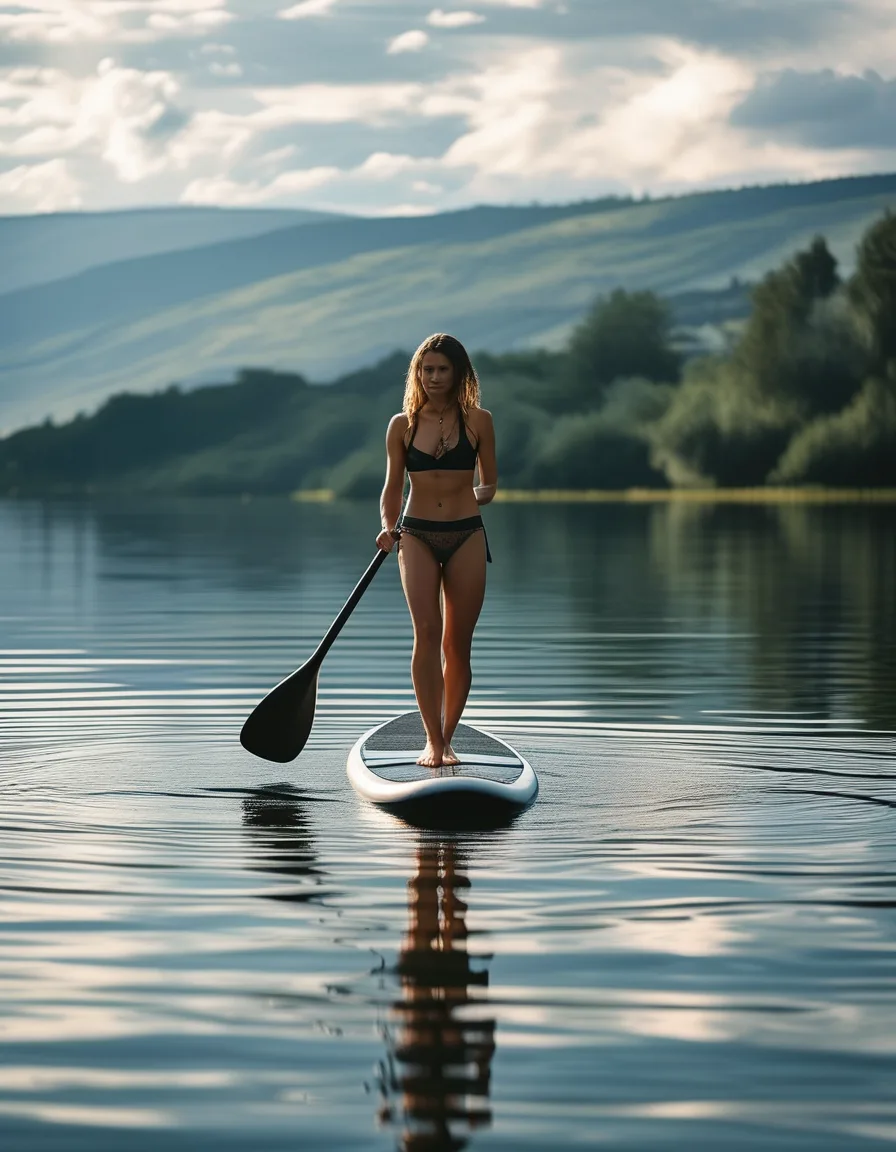
The addition: a-paddleboard-on-open-water-constantly-shifts-in-small-unpredictable-ways-forcing-continuous-micro-corrections-that-a-completely-stable-mat-surface-never-once-requires (a paddleboard floating on open water constantly shifting in small, genuinely unpredictable ways beneath a held pose, forcing continuous micro-corrections from the body that a completely stable mat surface never once requires at any point, per the sup-yoga-balance-and-falling-guide logic — a-paddleboard-floating-on-open-water-constantly-shifting-in-small-unpredictable-ways-beneath-a-held-pose-forcing-continuous-micro-corrections-that-a-completely-stable-mat-surface-never-requires), and the frame (the paddleboard training the surface-response half of balance a mat leaves out entirely)).
How That Added Instability Trains a Faster Correction Reflex
The gain: the-constant-need-for-small-automatic-corrections-on-a-moving-paddleboard-trains-the-bodys-correction-reflex-to-fire-faster-and-more-automatically-than-repetition-on-a-still-surface-ever-would (the constant, ongoing need for small automatic corrections while balancing on a moving paddleboard training the body’s correction reflex to fire faster and considerably more automatically than the same number of repetitions on a still surface ever would, per the sup-yoga-vs-mat-yoga-guide logic — the-constant-ongoing-need-for-small-automatic-corrections-while-balancing-on-a-moving-paddleboard-training-the-bodys-correction-reflex-to-fire-faster-and-more-automatically-than-the-same-repetitions-on-a-still-surface-would), and the frame (an unstable surface compressing months of reflex training into a handful of sessions).
A stable yoga mat only ever challenges the body’s own internal balance systems, since the surface itself never moves, while a paddleboard on open water constantly shifts in small unpredictable ways, forcing continuous micro-corrections a mat never requires. That constant need for small automatic corrections trains the body’s correction reflex to fire faster than repetition on a still surface ever would, which is why paddleboard balance work often shows real improvement within just a few sessions.
See It in Motion
Seen here: Racerback Tank Top - White — shop similar styles on bubblelime.com
Keep Reading
This article is for general informational and styling purposes only. Fit, sizing, and product availability may vary.