Why You Fall Off the Paddleboard More at the End of Class Than the Start
Quick Answer: Balancing on a paddleboard relies heavily on small stabilizer muscles in your ankles, feet, and core that fatigue faster than the bigger muscles used in the poses themselves. As those stabilizers tire through class, your board control degrades even though the poses aren’t getting physically harder.
The water conditions usually haven’t changed and the poses often get gentler toward the end of class — yet the falls increase. That mismatch points straight at fatigue in the stabilizing system, not the difficulty of what you’re attempting.
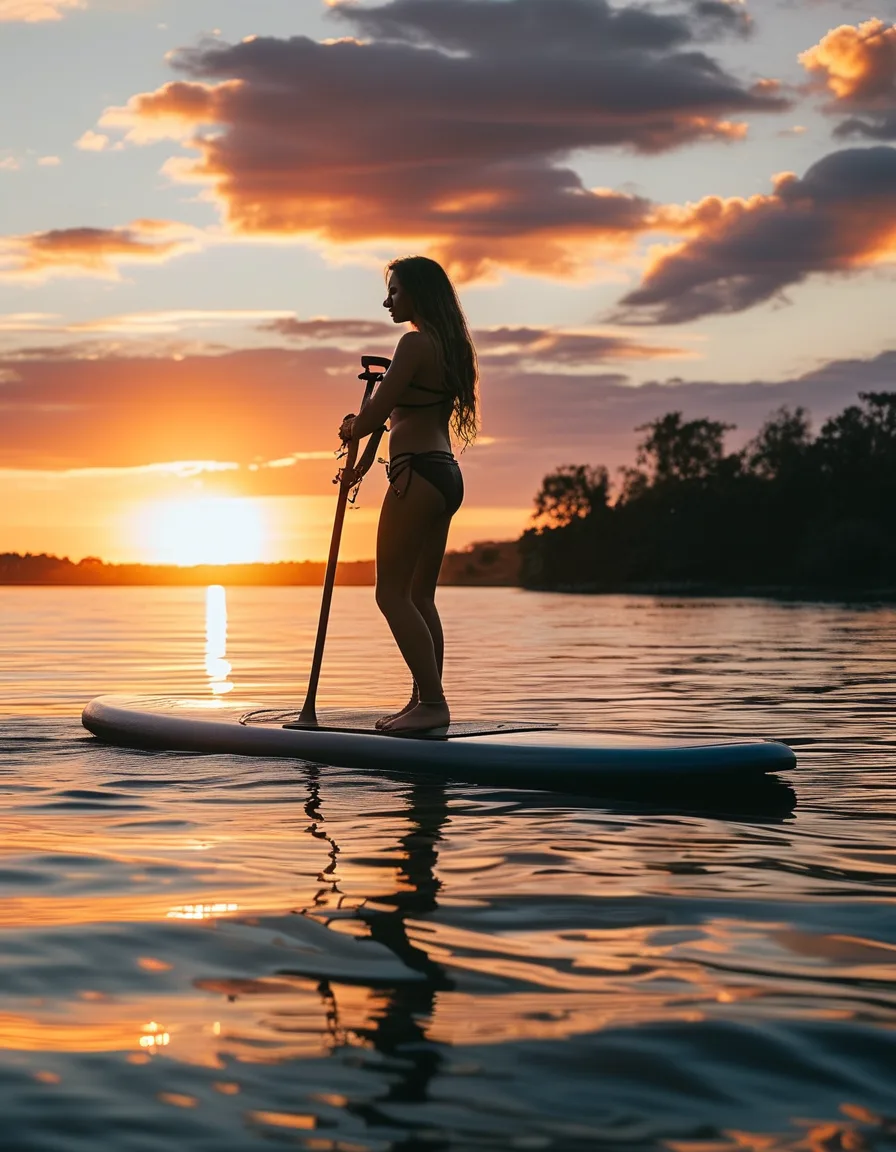
Why do stabilizer muscles fatigue faster than the muscles doing the pose?
Small, fast-twitch stabilizing muscles in your ankles and feet are constantly making tiny corrective adjustments to counter the board’s movement under you — a workload that’s continuous throughout class, unlike big muscle groups that mainly engage during specific poses. That constant low-level firing adds up to real fatigue by the 30-40 minute mark, even in poses that look easy.
This is the same reason standing on one leg on solid ground gets harder the longer you hold it — the stabilizers doing the fine correction work simply run out of gas before your bigger prime movers do.
Does core fatigue play into this too?
Yes, significantly. Your deep core muscles work continuously to keep your torso stable on an unstable surface, essentially the whole class, not just during obviously core-focused poses. As core endurance drops late in class, the ripple effect shows up as less overall board stability, which reads as ‘suddenly worse balance’ in poses that felt fine earlier.
This is why practitioners with strong general core endurance (from other training) often report noticeably fewer late-class falls than those with strong balance but less core stamina specifically.
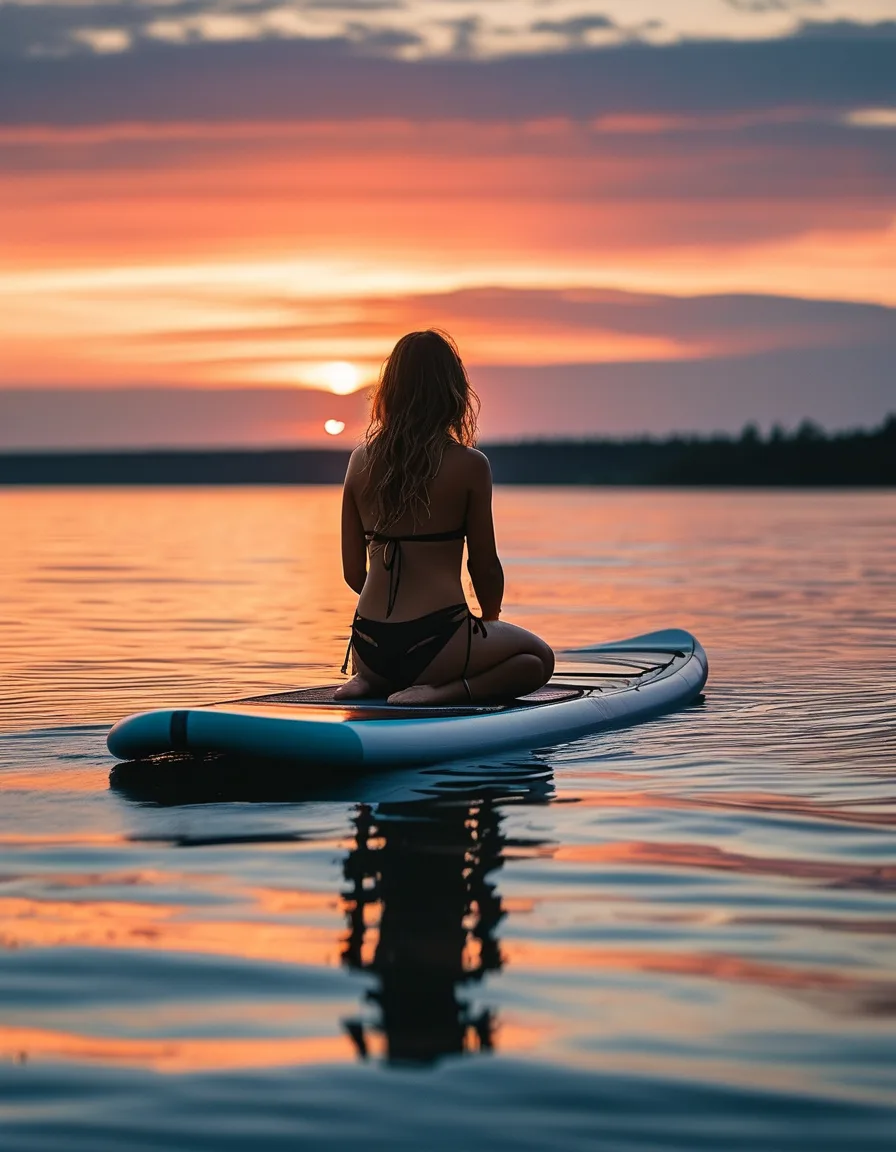
What Nobody Tells You About Where to Look
Here’s a detail almost never mentioned in class: your gaze point (drishti) drifts as you fatigue, and a wandering gaze is one of the fastest ways to lose balance regardless of muscle fatigue. Tired legs and a fixed gaze can still hold a pose; fresh legs with a drifting gaze often can’t.
As fatigue sets in late in class, consciously re-fixing your gaze on a single still point (not the water, not your feet) compensates for some of the muscular fatigue and can meaningfully extend how long you hold balance before falling.
How do you train specifically for late-class stability?
Build stabilizer endurance off the board with single-leg balance holds on land, extending duration over weeks (start at 20-30 seconds per side, build toward 60+). This directly targets the ankle and foot stabilizers that fatigue first on water.
On the board itself, practicing poses in the back half of a session rather than only when fresh — even just repeating a simple pose sequence twice through — trains your body to maintain control under the fatigue state it actually faces at the end of real classes.
FAQ: SUP Yoga Balance Questions, Answered
Is falling more at the end of class normal, or a sign I need to build strength?
It’s a very common pattern and not a sign of poor overall balance — it reflects stabilizer fatigue specifically, which responds well to targeted endurance training over a few weeks.
Does water condition (choppy vs calm) matter more than fatigue?
Both matter, but many practitioners notice the late-class fall pattern even on calm, unchanged water — a sign fatigue is the bigger factor in their specific case.
Should I take a short rest mid-class if I feel my balance declining?
Yes — a brief seated or kneeling rest partway through class lets stabilizers partially recover and often improves stability for the remainder of the session more than pushing through fatigued.
TL;DR:
- Small ankle and foot stabilizer muscles fatigue faster than the bigger muscles used in poses themselves
- Core endurance fatigue compounds this, since your torso needs constant stabilization the whole class
- A drifting gaze late in class worsens balance independent of muscle fatigue — re-fix your drishti
- Train stabilizer endurance with land-based single-leg holds, building toward 60+ seconds per side
The late-class wobble is a stamina issue in a specific muscle system, not a sign your balance skill regressed mid-class.
See It in Motion
Seen here: Bootcut Capri Yoga Pants with Pockets — shop similar styles on bubblelime.com
Keep Reading
This article is for general informational and styling purposes only. Fit, sizing, and product availability may vary.