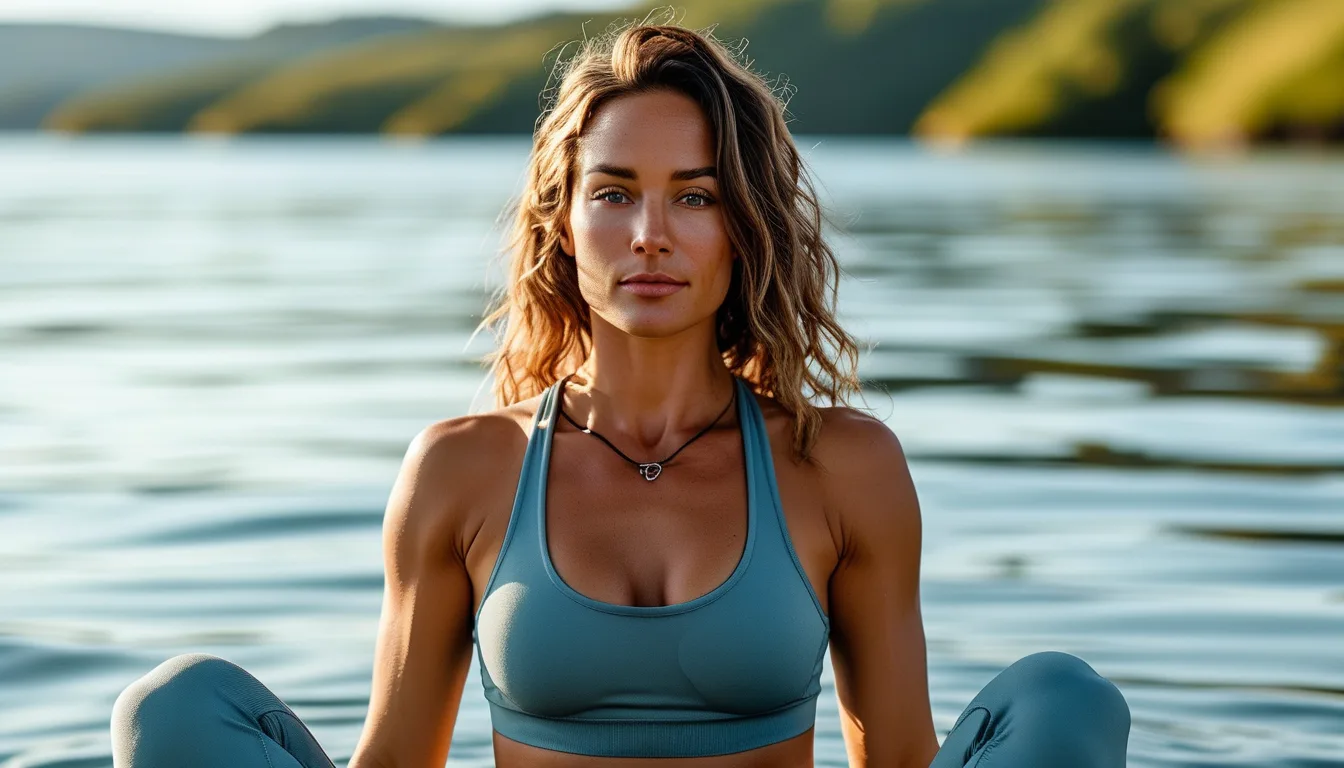
SUP Yoga in Fall: Warm Water, Cold Air, and What to Wear
Quick Answer: In fall, water cools far more slowly than air, so a lake can sit comfortably warm while the morning air is genuinely cold. Dress for the air while you are dry and the water in case you go in: a snug synthetic or wool base layer, a wind-blocking outer you can remove mid-session, and nothing cotton. The failure mode is not falling in — it is getting wet at the start and then sitting in wind for forty minutes.
The water felt lovely when you tested it with your hand. Ten minutes into the session your fingers are stiff and your shoulders will not relax into anything.
Water has a much higher heat capacity than air, so a lake lags the season by weeks — that is why the temperature you sampled with your hand told you almost nothing about how the session was going to feel. The third section covers the layering mistake that makes the cold worse rather than better.
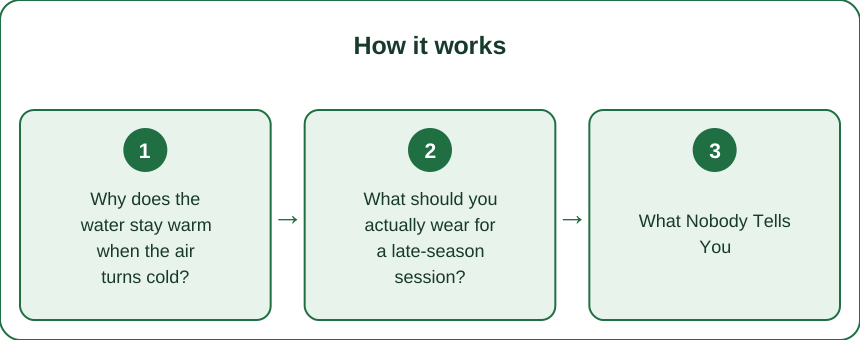
Why does the water stay warm when the air turns cold?
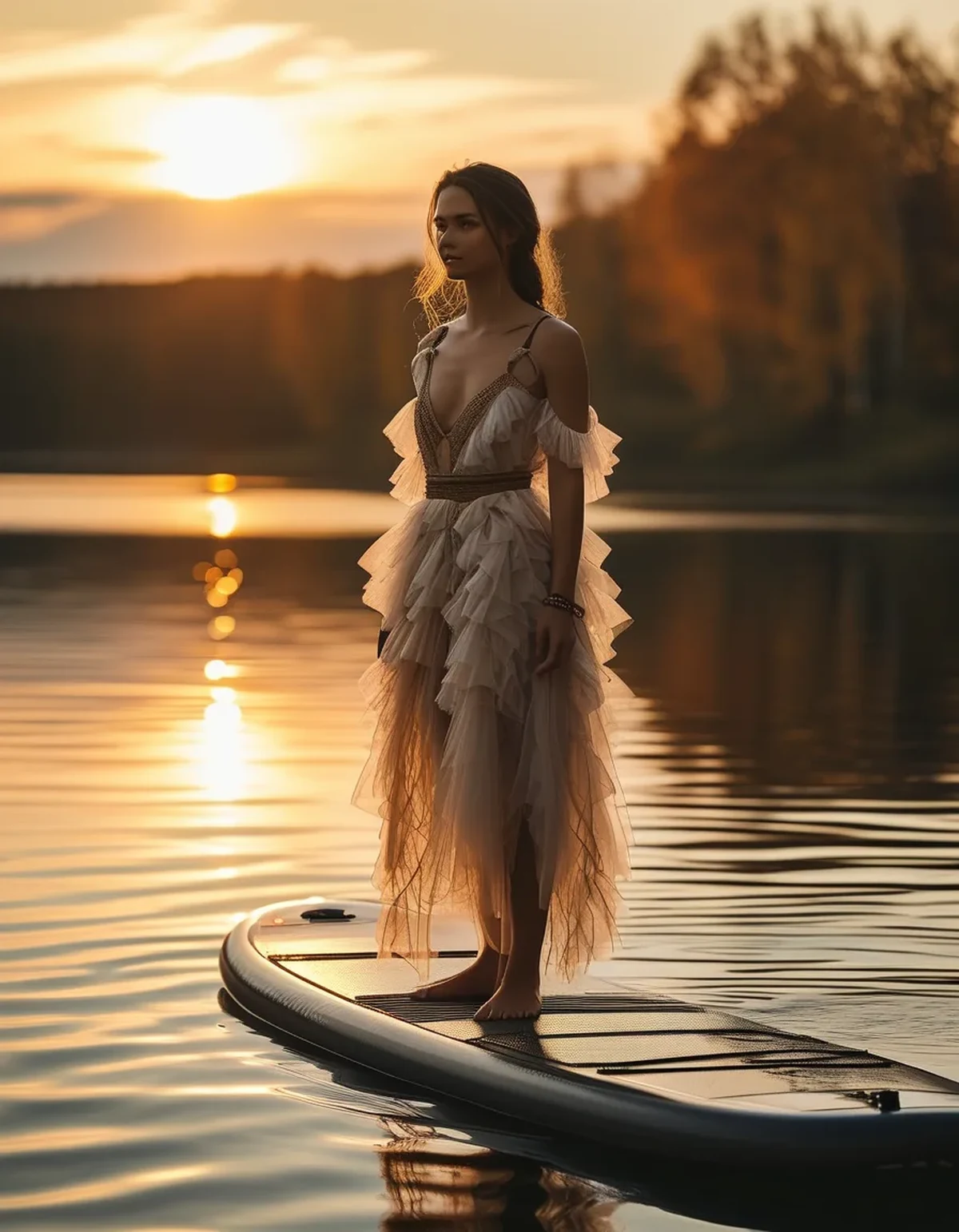
Water stores an enormous amount of heat relative to air, and it releases that heat slowly. A lake that spent all summer absorbing sun does not shed that energy in the two weeks that the air turns.
The practical result at northern latitudes: the water often peaks in late summer and stays notably warmer than the average air temperature well into autumn. Larger and deeper bodies of water lag the most. A big lake can stay swimmable well past the point where you need a jacket on shore.
That creates the specific fall condition: pleasant water, cold air, and a large gap between them. Neither a summer kit nor a winter kit fits it.
Two other things change alongside temperature and they matter more than people expect:
Wind. Autumn brings more of it, and wind is the dominant variable for how cold you feel when any part of you is damp. A perfectly manageable air temperature becomes unpleasant fast with wind over wet skin.
Light. Sunrise arrives later, sunset earlier, and the sun sits lower. Golden hour is gorgeous for a session and the temperature drops quickly once the sun is off the water, so an evening practice can end much colder than it started.
What should you actually wear for a late-season session?
Build it in three layers, and choose each one for a different failure.
Base layer — snug, synthetic or merino wool. This is the layer that matters most, because it stays warm when damp. A fitted long-sleeve rashguard or a thin merino top works. It needs to be close-fitting so it does not hang and catch when you move through poses.
Mid layer — optional, removable. A light fleece or thicker long-sleeve for the paddle out and the first few minutes. You will almost certainly take it off once you are moving. Have somewhere to put it — a dry bag bungeed to the board.
Outer layer — wind, not rain. A light windbreaker is the highest-value item in a fall kit and the one people skip. Wind over damp skin is the actual mechanism of getting cold on the water.
Absolute rule: no cotton anywhere. Cotton holds water, loses essentially all its insulating value when wet, and stays wet. A cotton t-shirt that takes one splash becomes a cold compress you cannot take off mid-session.
Bottoms: leggings in a quick-drying technical fabric. Neoprene shorts are worth considering once air temperatures drop further, since you spend a lot of the session kneeling and seated on a wet board.
Feet and hands cool first. Neoprene socks are inexpensive and change the whole session. If it is cold enough that your hands ache on the paddle, thin paddling gloves are worth it — cold, stiff hands make a fall more likely, not less.
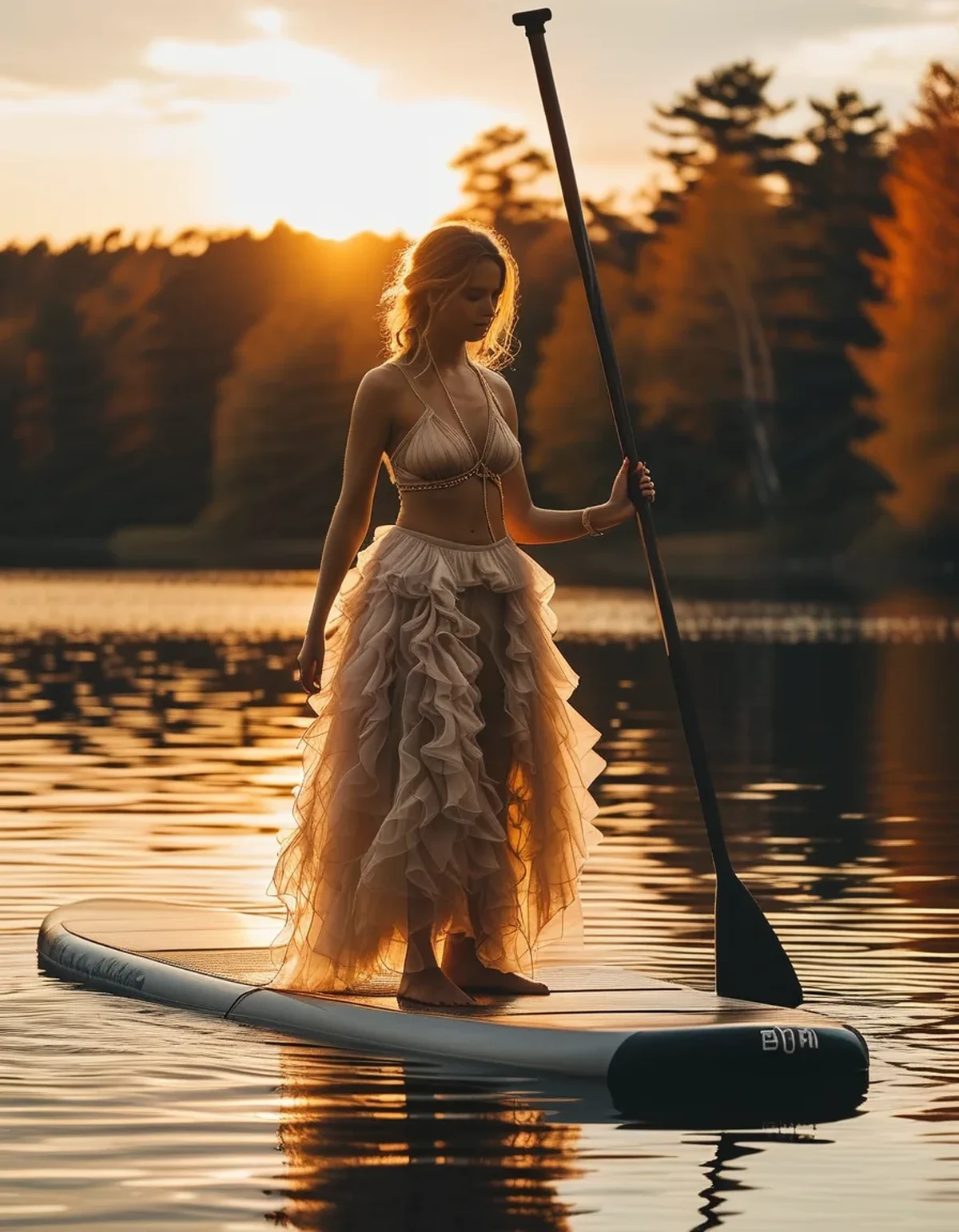
What Nobody Tells You: dressing too warm is what gets you cold
The instinct is to overdress. It backfires with a specific, reliable sequence.
You start warm. Ten minutes into the flow you are working — SUP yoga is more effort than mat yoga, because you are stabilizing constantly — and you sweat into your base layer. Then you settle into a longer hold, or savasana, and stop generating heat. Now you are sitting still on the water, in wind, in a soaked layer.
Damp from your own sweat is the same problem as damp from the lake, and it is far more common. Most people who get cold on a fall session were never in the water at all.
The fix is to be slightly cool at the start. If you are comfortable standing on the dock in your kit, you are overdressed for what you are about to do. Aim to feel like you want one more layer for the first five minutes.
Second half of the fix: shed early, not late. Take the mid layer off as soon as you notice yourself warming, before you have sweated into everything. Put it back on for the paddle home, when you have stopped working and the sun is lower.
A structural adjustment worth making: restructure the session itself. Front-load the moving flow, keep long static holds shorter than you would in summer, and finish with the paddle back rather than a long float. A ten-minute savasana on a lake in October is where a good session turns into a shivering one.
How do you handle actually falling in?
Late season, this stops being funny and becomes a thing to plan for.
Know the water temperature, not just how it feels. A quick hand test tells you about the top few inches, which the sun has been warming all day. Below that it is colder, and if the lake has turned over it can be considerably colder.
Have dry clothes waiting in a dry bag, in the car, not on the board. A full change including socks. The single biggest determinant of whether an unplanned swim is a funny story or the end of your day is whether there is a dry set of clothes within a few minutes of you.
Get out and get moving. Standing around wet in wind is how a manageable dunk becomes a genuinely cold experience. Paddle back at effort — it warms you and it is faster.
Practice the remount before you need it. Getting back onto a board is harder with cold hands and heavy wet clothing than it is in July in a swimsuit. Do a deliberate remount early in the season while it is still pleasant.
Do not go alone in the shoulder season. This is the one non-negotiable. Cold water impairs judgment and grip strength faster than you expect, and the whole risk profile changes when there is no one on the water with you.
If the water drops far enough that a fall would be a serious event, that is the point to move to a wetsuit or move indoors — this is general safety information, not a substitute for local knowledge of your specific body of water.
FAQ: Fall SUP Yoga Questions, Answered
At what water temperature should I switch to a wetsuit?
Once the water is cold enough that a fall would be genuinely shocking rather than bracing, wear one. Many paddlers make the switch somewhere in the mid-60s Fahrenheit range and adjust from there. Local conditions and your own cold tolerance matter more than a universal number.
Is morning or evening better in fall?
Evening is usually warmer air and calmer light, but the temperature falls off fast once the sun is down and you may finish in the dark. Morning is colder but more predictable, and mornings tend to have the flattest water. If the goal is comfort, mid-morning is the sweet spot.
Does the board itself feel different in cold weather?
Yes — inflatable boards lose pressure as the air inside them cools, so a board inflated in a warm garage will read lower once it sits on cold water. Check the pressure at the launch rather than at home, because a soft board is noticeably less stable.
TL;DR:
- Water lags the season by weeks, so fall means warm water and cold air at the same time.
- Layer snug synthetic or merino, add a windbreaker, and never wear cotton.
- Overdressing causes most fall chills — you sweat into your layers, then stop moving.
- Restructure the session: more flow, shorter holds, no long float at the end.
- Have dry clothes off the board, practice your remount early, and do not paddle alone in the shoulder season.
Late season is genuinely the best time to be on a board. The water is still holding summer, the crowds are gone, the light is better than it will be all year, and the surface is often glass in a way it never is in July. All of that is available for the price of thinking about your kit for ten minutes before you leave the house. Get the base layer right, bring the windbreaker you will probably take off, and put a dry change of clothes in the car — then go enjoy a lake that most people have already decided is closed for the year.
See It in Motion
Seen here: Racerback Tank Top - White — shop similar styles on bubblelime.com
Keep Reading
This article is for general informational and styling purposes only. Fit, sizing, and product availability may vary.