The SUP Yoga Core Work That Actually Carries Over to Your Mat Practice
Quick Answer: SUP yoga’s constant micro-balancing recruits your deep core stabilizers (transverse abdominis and obliques) far more continuously than mat yoga does, and that specific stabilization skill directly improves balance poses and plank holds once you’re back on solid ground.
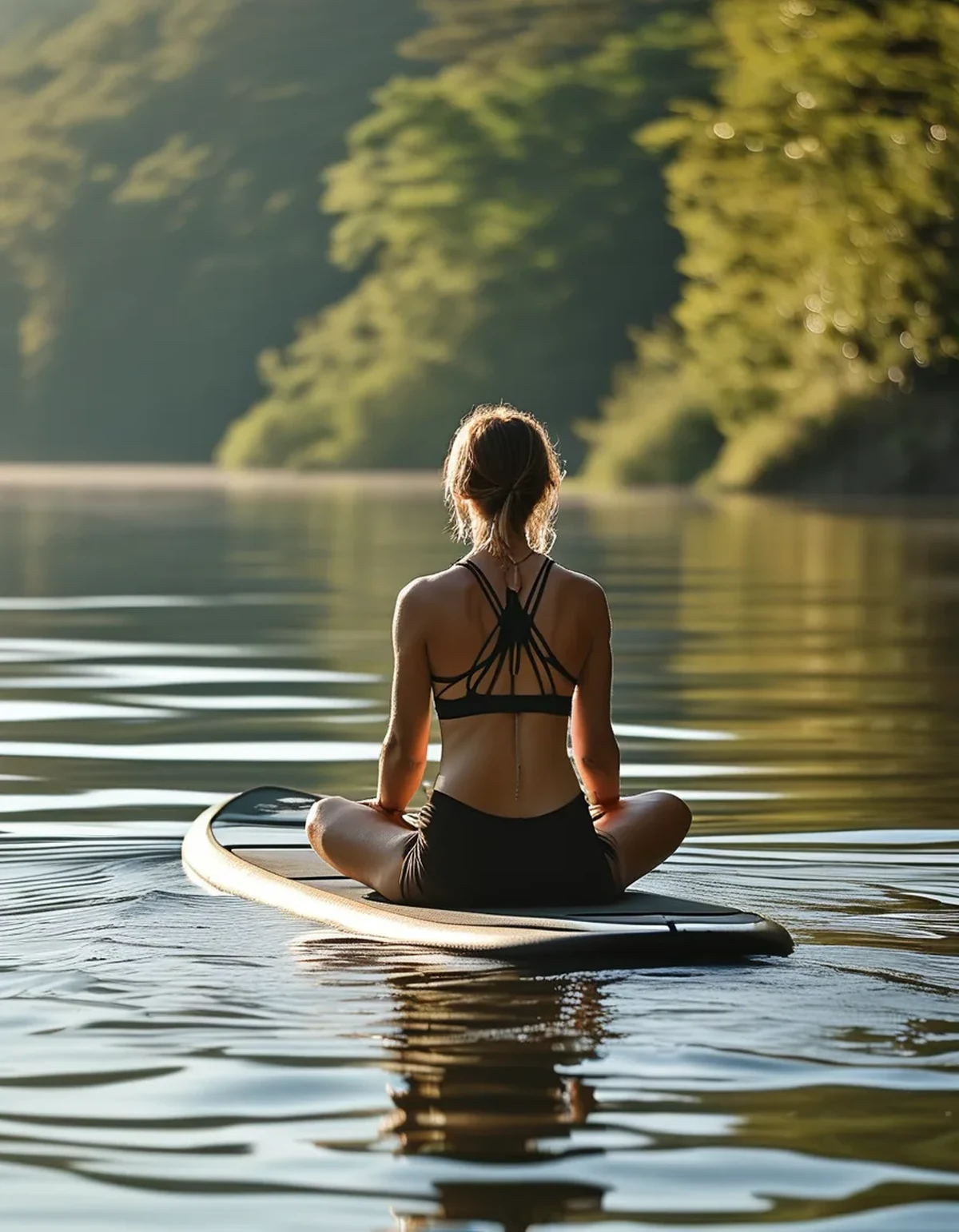
You probably noticed it the first session — a pose that feels stable on a mat suddenly requires your entire core just to stay upright on water. That extra effort isn’t wasted; it’s building a specific kind of stability that most mat practices never fully demand.

Why does a paddleboard demand more core engagement than a mat?
A yoga mat is a fixed, stable surface — your core only has to hold a pose, not constantly correct for movement underneath you. A paddleboard shifts with every ripple and every micro-adjustment of your weight, so your deep stabilizing muscles (transverse abdominis, obliques, the small muscles around your spine) fire almost continuously just to keep the board level.
What specific mat poses improve from SUP yoga practice?
Balance poses (tree, half-moon, warrior 3) and plank variations show the clearest carryover, since both rely on the same deep stabilization SUP yoga trains constantly. Many practitioners notice their mat balance holds feel noticeably steadier within a few weeks of regular SUP sessions.
What Nobody Tells You About SUP Yoga Core Training
It’s not really your abs doing the visible work — it’s the small, unglamorous stabilizer muscles around your hips and spine firing constantly and invisibly. You won’t feel a traditional ‘burn’ the way a mat core class delivers; you’ll instead feel a full-body fatigue that’s harder to pinpoint to one muscle group.
That’s actually the point — real-world stability (catching yourself on uneven ground, staying upright on a moving bus) comes from that same diffuse, reactive stabilization, not from isolated ab exercises.
Does SUP yoga replace core-specific mat training?
Not entirely — SUP yoga builds reactive, stabilizing core strength excellently, but it doesn’t build the same targeted strength a dedicated plank or dead bug routine does. The two complement each other well: SUP for reactive stability, mat core work for targeted strength.
FAQ: SUP Yoga and Core Strength, Answered
How many SUP yoga sessions before I notice mat improvement?
Most people report noticing steadier balance poses within 3-4 sessions, though this varies with how often you practice and your starting balance level.
Does board inflation level affect the core benefit?
Yes — a softer, less rigid board wobbles more and demands more constant correction, which can increase the stabilization challenge (within a safe, controlled range).
Is SUP yoga core work harder for beginners or experienced yogis?
It’s genuinely a reset for both — even advanced mat practitioners are often humbled by how much more their core has to work on unstable water, since the skill is somewhat separate from strength or flexibility.
TL;DR:
- Paddleboards demand continuous deep-core stabilization that a fixed mat surface doesn’t require
- Balance poses and planks show the clearest carryover benefit back on the mat
- The training feels like full-body fatigue, not a targeted ab burn — that’s the reactive stabilization at work
- SUP yoga complements, but doesn’t replace, dedicated core strength training
The wobble isn’t just harder — it’s training a kind of stability your mat practice has probably never fully demanded.
See It in Motion
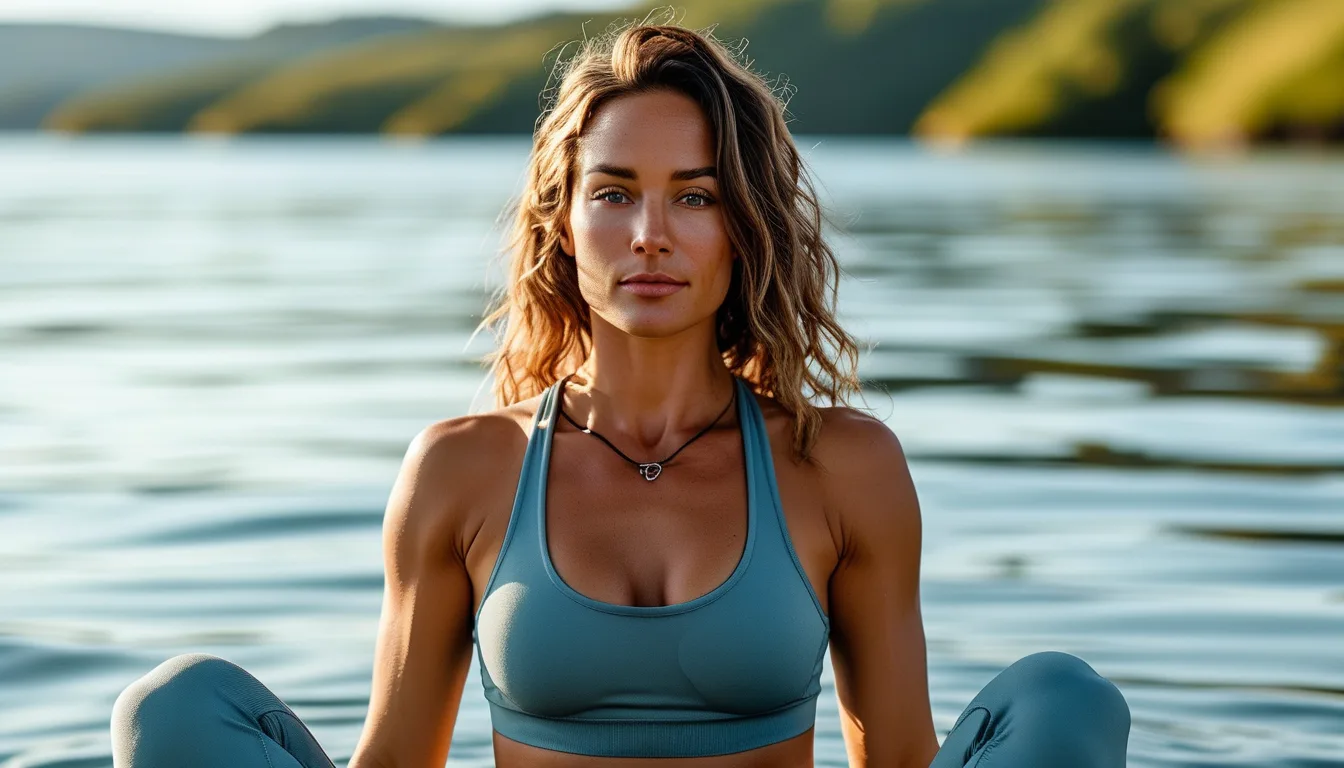
Seen here: UPF 50+ Racerback Yoga Tank Top — shop it on bubblelime.com
Keep Reading
This article is for general informational and styling purposes only. Fit, sizing, and product availability may vary.