Why Your SUP Yoga Board Feels Wobblier Than Your Instructor's (It's the PSI)
Quick Answer: An underinflated board (below its recommended PSI, usually 12-15 for yoga-specific boards) flexes more and feels noticeably wobblier, even at the correct size. Always check and match the manufacturer’s recommended PSI before assuming your balance is the problem.
You did the poses, held your balance the same way your instructor did, and your board still felt like it was constantly shifting underneath you. Before blaming your balance, it’s worth checking a number most people never look at: the PSI.

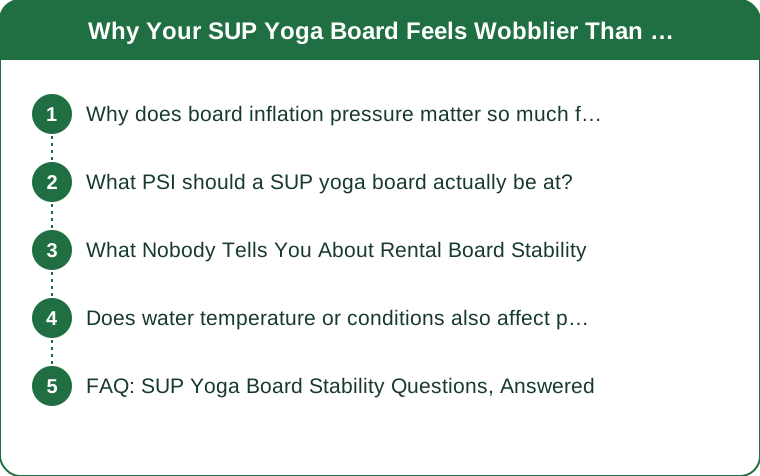
Why does board inflation pressure matter so much for stability?
An underinflated inflatable SUP board flexes and bows slightly under your body weight, especially during a yoga pose that shifts weight to one area of the board, which creates a soft, unstable feeling completely separate from your actual balance skill. A properly inflated board stays rigid, distributing your weight evenly and giving you a stable, predictable surface.
This flex is often subtle enough that people don’t immediately think ‘the board is underinflated’ — it just feels like the water is choppier or their balance is worse that day.
What PSI should a SUP yoga board actually be at?
Most yoga-specific inflatable SUP boards recommend 12-15 PSI, though this varies by manufacturer and board size, so checking the specific number printed on your board or in its manual matters more than assuming a universal standard. Rental boards, in particular, are frequently underinflated because staff inflate them quickly between rentals without checking the gauge carefully.
Using a pressure gauge pump (most SUP pumps include one) to verify PSI before every session, especially with a rental or borrowed board, removes the guesswork entirely.

What Nobody Tells You About Rental Board Stability
Rental SUP yoga boards are consistently one of the most common sources of a ‘wobbly board’ experience, since they’re inflated and deflated repeatedly by staff working through many rentals per day, and a quick check often means eyeballing firmness rather than using a gauge. This is why the exact same class, the exact same poses, can feel dramatically more stable on your own properly-inflated board versus a rental.
If you regularly do SUP yoga, checking PSI yourself with your own gauge before getting on a rental board is a quick way to rule out this variable before assuming your practice has gotten worse.
Does water temperature or conditions also affect perceived stability?
Yes, but less than most people assume compared to PSI — choppier water and wind genuinely affect board movement, but a properly inflated board handles minor chop far better than an underinflated one handles even calm water. If your board wobbles even on genuinely flat, calm water, that’s a stronger signal pointing to inflation rather than conditions.
FAQ: SUP Yoga Board Stability Questions, Answered
How do I check my board’s PSI before a session?
Use a pressure gauge pump (most SUP-specific pumps include one) and compare the reading to the recommended PSI printed on the board or manual.
Are rental SUP boards usually underinflated?
Often, yes — high rental turnover means boards aren’t always checked carefully with a gauge between uses.
Does a slightly underinflated board actually matter for beginners specifically?
It matters even more for beginners, since less board rigidity makes an already-challenging balance skill noticeably harder to learn.
TL;DR:
- Underinflated SUP boards flex and feel unstable, separate from your actual balance ability
- Most yoga-specific boards recommend 12-15 PSI — check your board’s specific number
- Rental boards are a common source of underinflation due to high turnover
- Wobbliness on genuinely calm water points more to inflation than conditions
Before your next session, check the PSI with a gauge — it might explain more of the wobble than your balance does.
See It in Motion
Seen here: Bootcut Yoga Pants with Side Pockets — shop it on bubblelime.com
Keep Reading
This article is for general informational and styling purposes only. Fit, sizing, and product availability may vary.