Your SUP Yoga Board's PSI Is Probably Wrong for Yoga — Here's the Fix
Quick Answer: Most inflatable SUP boards are rated for 12-15 PSI for paddling stability and speed, but SUP yoga generally performs better at the lower end of that range or even slightly under, since a marginally softer board deck absorbs micro-movements better during held poses.
You followed the board’s max-PSI recommendation assuming firmer means more stable, and every pose feels twitchier than expected. For yoga specifically — as opposed to paddling — that extra firmness is working against you.

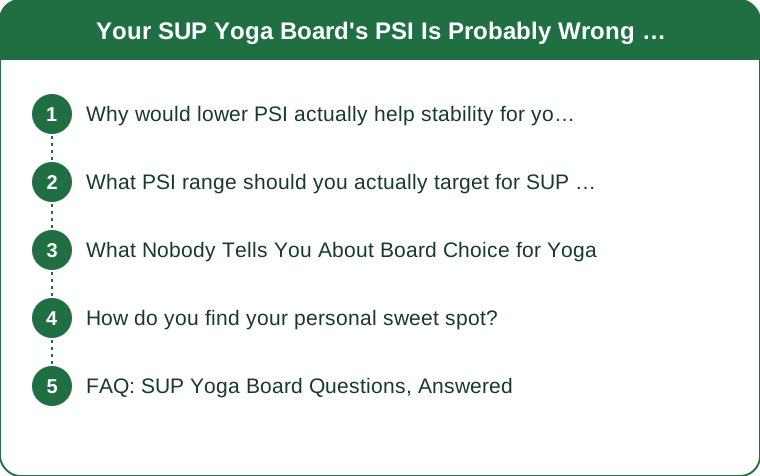
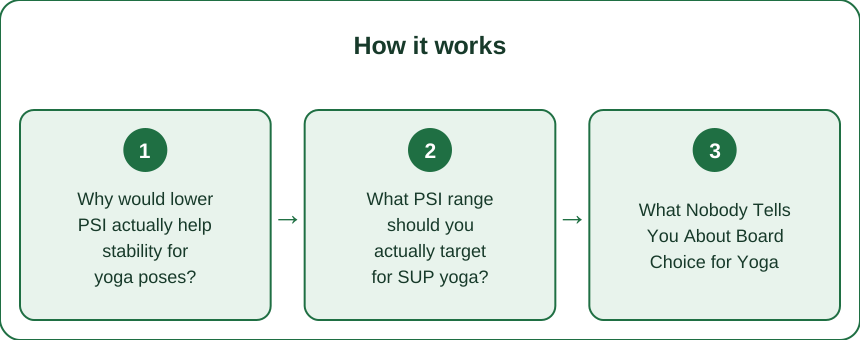
Why would lower PSI actually help stability for yoga poses?
A fully firm, high-PSI board transmits every small weight shift directly into a board response, which is exactly what you want for paddling efficiency but works against the slow, controlled balance yoga poses require.
A slightly softer deck (lower end of the recommended PSI range) absorbs and dampens some of that micro-movement, giving a marginally more forgiving surface for holding static poses.
What PSI range should you actually target for SUP yoga?
Check your specific board’s rated range first (commonly 12-15 PSI for yoga-oriented inflatables), then aim for the lower third of that range rather than the maximum.
Going significantly under the minimum rated PSI, though, makes the board feel mushy and unstable in a different way — there’s a real floor below which softness stops helping and starts hurting.

What Nobody Tells You About Board Choice for Yoga
Board width and volume matter more than PSI for overall stability — a wider, higher-volume board at slightly lower PSI will outperform a narrow, low-volume board at maximum PSI every time.
Many dedicated “yoga SUP” boards are simply wider than standard touring boards for exactly this reason — the PSI adjustment is a secondary fine-tune, not the primary stability factor.
How do you find your personal sweet spot?
Start at the lower-middle of your board’s rated PSI range, do a few basic poses, and adjust incrementally — add a small amount of air if it feels too soft/wobbly underfoot, release a small amount if poses feel jarring or twitchy.
Water conditions matter too: calm water tolerates softer inflation better than any chop or current, which demands more firmness regardless of yoga preference.
FAQ: SUP Yoga Board Questions, Answered
Does board length matter as much as width for yoga stability?
Width generally matters more for standing/balance stability; length affects tracking and glide, which is less relevant for a mostly stationary yoga session.
Should beginners use a lower PSI than experienced SUP yogis?
Beginners often benefit from being closer to the higher end initially for more predictable feedback, then experimenting toward softer settings as balance improves.
Can over-inflating damage the board?
Yes — exceeding the manufacturer’s max PSI risks seam stress and, in rare cases, damage. Stay within the rated range even when experimenting with firmness for yoga.
TL;DR:
- SUP yoga generally favors the lower end of your board’s rated PSI range, not the max
- A slightly softer deck dampens micro-movements better during held poses
- Width and volume affect stability more than PSI — check board design first
- Adjust incrementally and factor in water conditions, not just yoga preference
Next session, deflate slightly toward the lower end of your board’s range and see if poses feel steadier.
See It in Motion
Seen here: High Waist Bootcut Yoga Pants — shop it on bubblelime.com
Keep Reading
This article is for general informational and styling purposes only. Fit, sizing, and product availability may vary.