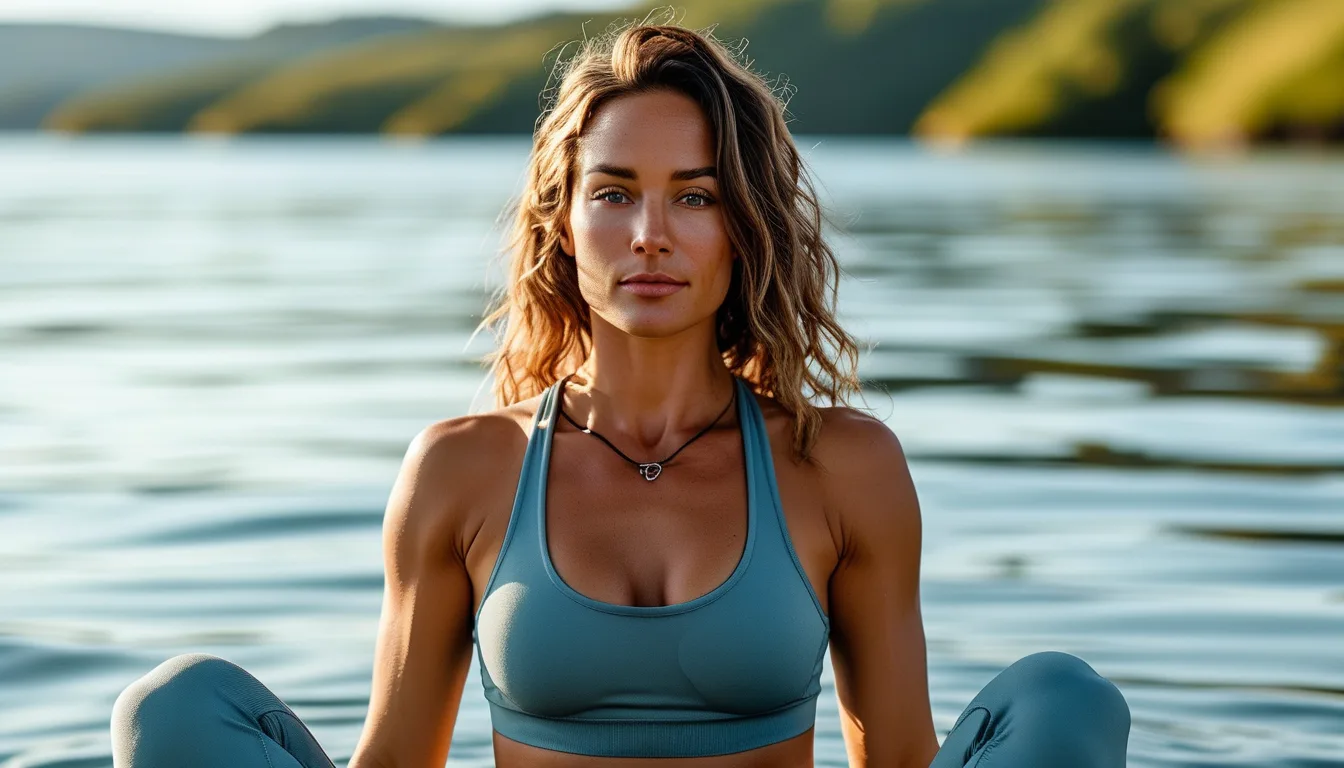
Why Your Board Drifts During Long Holds and How to Stop It
Quick Answer: A paddleboard drifts because it is a large flat surface in two moving fluids at once — water below and air above — and wind on the exposed deck usually moves it more than current does. During long holds you stop making the micro-corrections that were quietly holding position. The fixes are an anchor for anything over five minutes, orienting the board nose-into-wind, and choosing sheltered water rather than fighting open water.
Drift is a positioning problem, not a balance problem, and it is entirely solvable.
This blog has covered anchoring technique, why you keep falling off in calm water, and why glassy water actually makes practice harder. This one is about staying where you started.

Why does the board move most during the poses that feel most still?
Because during the active parts of your practice, you were steering without realising it.
Every transition involves weight shifts that act like tiny steering inputs. Move your hips, and the board pivots slightly under you. Across a flowing sequence, those cancel out and hold you roughly in place.
A long hold removes all of that input. The board is now purely at the mercy of wind and current, with nothing correcting it.
Wind acts on a very large flat surface. A twelve-foot board with a person on it presents a substantial sail area, and light wind moves it more than most people believe.
Your body is the largest part of the sail. Which is why a standing pose drifts far faster than a seated one, and why savasana drifts slowest of all.
Current is usually the smaller factor on a lake. On a river or a tidal estuary it dominates, and that changes the entire approach.
And drift compounds. Once the board turns broadside to the wind, its exposed area roughly triples and the movement accelerates noticeably.
What actually holds position?
Three things, in order of how much they matter.
An anchor, for any hold over about five minutes. A three to five pound folding anchor on a fifteen to twenty foot line is enough for most lake conditions, clipped to the nose D-ring rather than to the middle.
Attach at the nose, never the side. A side attachment lets the board swing broadside to the wind, which is the worst possible orientation and also the least stable one to practice on.
Orient the nose into the wind before you settle. A board pointing into the wind presents its narrowest profile and tracks straight; a board across the wind slides sideways continuously.
Choose shelter over open water. A cove, a leeward shoreline or a spot behind a headland will do more than any piece of equipment.
Drop the fin for shallow water only. The fin resists sideways slide significantly, so keeping it in place matters more than people expect if drift is your problem.
And check your line length against depth. Anchor line should be roughly three times the water depth. Too short and the anchor lifts and skips along the bottom, which is the most common reason an anchor seems not to work at all.
What Nobody Tells You About Anchored Practice
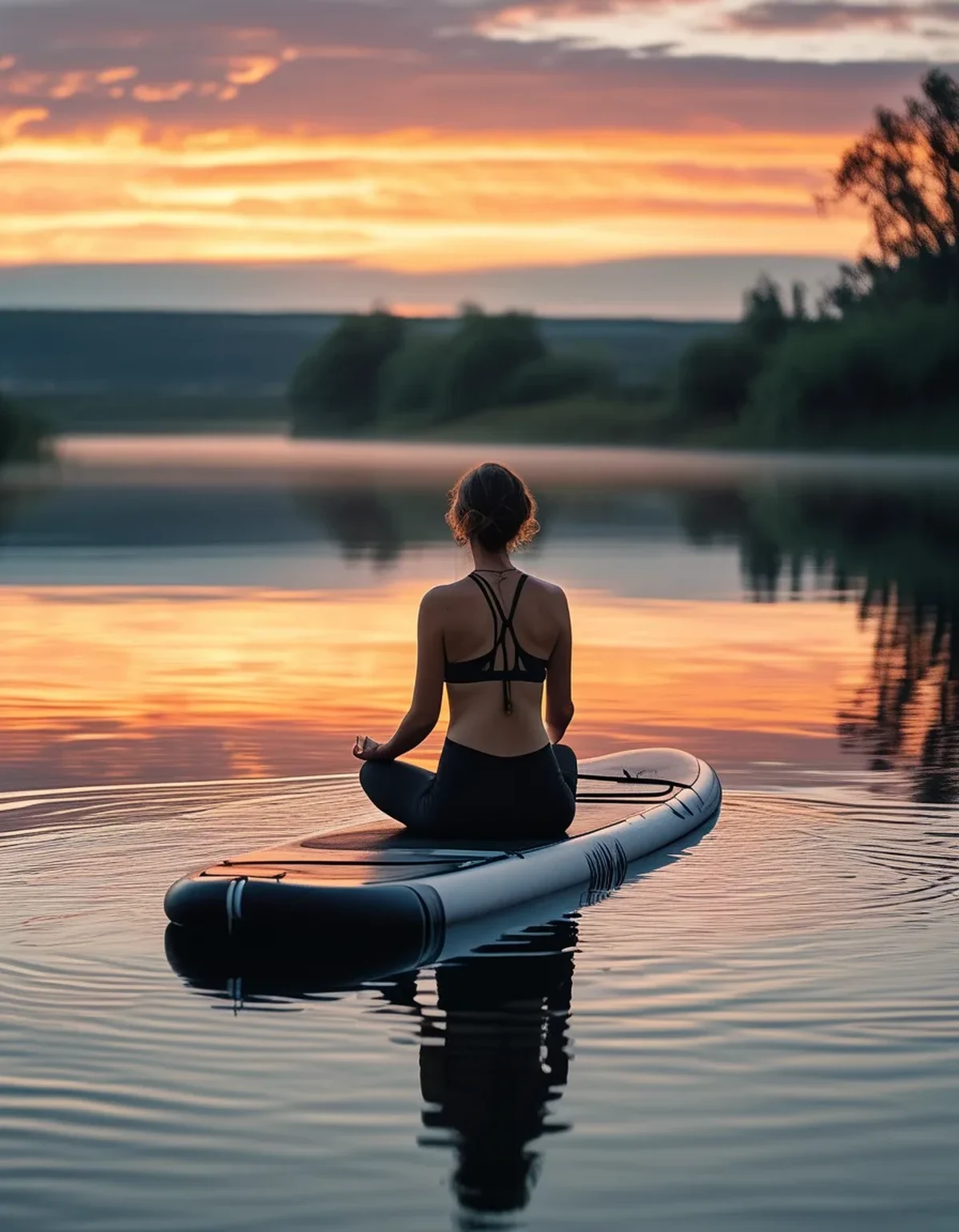
An anchored board behaves differently underfoot. It stops drifting with the small waves and starts being hit by them, which makes balance feel harder for the first few minutes, not easier. This is normal and it settles.
The line will find your feet. Coil the excess and stow it at the nose. A loose line across the deck during a standing pose is a genuine trip hazard and the most common anchoring injury.
You will swing in an arc, not stay in a point. A board on an anchor line pivots around the anchor as the wind shifts. If you are practising near a shoreline or another board, allow the full radius.
Wind picks up predictably. On most lakes it is calmest at sunrise and builds through late morning. A session that begins in glass and ends in chop was entirely forecastable.
Anchoring in weed is a waste of time. The anchor slides across the top of it. Look for a sand or gravel bottom, which you can usually see well enough at yoga depths.
And you should be able to release it fast. A clip you can undo in one motion, not a knot. If conditions change, being tied to the bottom is the last place you want to be.
A practice setup that holds for a full session
Seven minutes of setup that saves the whole hour.
Check the wind forecast for the hour you will actually be on the water, not the one you leave the house in.
Choose a sheltered spot with a visible bottom at roughly waist to chest depth. Deep enough to be safe if you go in, shallow enough to anchor easily.
Inflate to the recommended pressure. An underinflated board flexes, and a flexing board sits lower and drifts more as well as feeling unstable.
Anchor from the nose, line about three times the depth, excess coiled and stowed.
Point the nose into the wind and let the board settle for a minute before you get up. If it swings broadside straight away, your line is too long or your anchor has not set.
Put the longest holds at the start, while the wind is lightest, and save the flowing sequences for later when conditions build.
And pick a fixed landmark on shore to check against between poses. It takes two seconds and it tells you whether you are holding or moving long before you end up somewhere unexpected.
FAQ: SUP Yoga Positioning Questions, Answered
Why does my paddleboard drift so much during yoga?
Mostly wind, not current. A board with a person on it is a large sail, and during long holds you stop making the small weight-shift corrections that were quietly holding position during flowing sequences.
Do I need an anchor for SUP yoga?
For anything with holds over about five minutes, yes. A three to five pound folding anchor on a line roughly three times the water depth, clipped to the nose D-ring, handles most lake conditions.
Should I attach the anchor to the nose or the side of the board?
Always the nose. A side attachment lets the board turn broadside to the wind, which triples the exposed surface area and makes both drift and balance dramatically worse.
TL;DR:
- Drift is mostly wind on a large flat surface, and long holds remove the micro-corrections that were holding you in place.
- Anchor from the nose, with a line about three times the water depth, and coil the excess out of your feet.
- Point the nose into the wind before settling. Broadside is the worst orientation for both drift and stability.
- Do your longest holds early, when the wind is lightest, and save the flow for when it builds.
Staying put is a setup problem. Solve it before you get on the board, not after you have drifted.
See It in Motion
Seen here: UPF 50+ Short Sleeve Rashguard Swim Shirt — shop it on bubblelime.com
Keep Reading
This article is for general informational and styling purposes only. Fit, sizing, and product availability may vary.