How to Get Back on a Paddleboard After Falling In Without Exhausting Yourself
Quick Answer: Remount from the side of the board at its widest point, never the nose or tail. Put both hands on the far rail or on the centre carry handle, kick your legs up behind you into a horizontal position, then slide your chest onto the deck and rotate to sitting. The two errors that exhaust people are pulling with the arms from a vertical position and trying to remount at the tail, which just pushes the board away. Kick to horizontal first - the legs do the work, not the arms.
Here is the full technique and the variations for wind and fatigue.
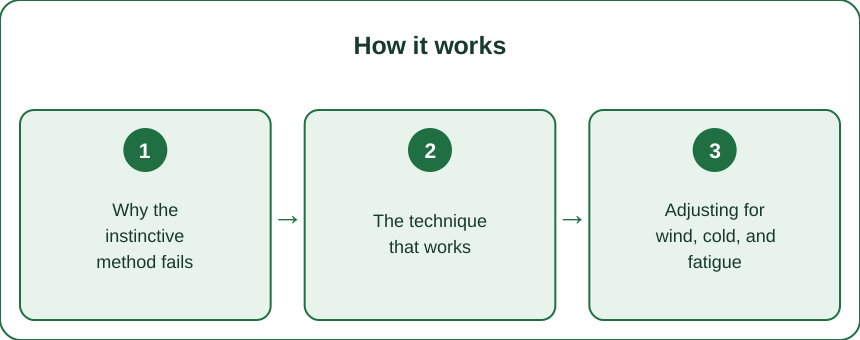
Why the instinctive method fails
Most people try to pull themselves straight up out of the water, which means lifting most of their bodyweight with the arms from a hanging vertical position. Very few people can do that repeatedly, and nobody can do it when tired.
Hanging vertically also pushes the board down and away. Downward force on the rail tips the board toward you and slides it sideways, so effort goes into moving the board rather than moving you.
The tail is the worst place to try. Boards taper at the tail, so pressure there submerges it and pivots the whole board, which is why people who try to climb on from behind spin in circles.
The nose is nearly as bad for the same reason, with the added problem that a submerged nose turns the board into a diving plane as soon as you get any weight on it.
Fatigue compounds fast in water. Two or three failed attempts cost more energy than a whole session of paddling, and each failure makes the next one harder - which is the real safety issue.
The fix is to stop lifting and start floating. Getting your body horizontal on the surface first means you are sliding onto the board rather than climbing onto it, and sliding costs almost nothing.
The technique that works
Position yourself at the side of the board, level with the centre handle. This is the widest, most buoyant, most stable point - and the only place the board will support asymmetric weight without tipping.
Reach across and grip the far rail, or hold the centre carry handle. Gripping the near rail gives you nothing to pull against; reaching across gives you leverage and keeps the board from sliding away.
Kick your legs up behind you until you are horizontal, face-down on the surface. This is the step people skip and it is the whole technique. A few strong flutter kicks bring your hips and legs to the surface.
Once horizontal, kick hard and slide your chest onto the deck. You are moving forward, not upward, and the board takes your weight progressively rather than all at once.
Then rotate. Bring one knee onto the deck, roll onto your hip, and come to a seated or kneeling position before doing anything else. Do not try to stand from a prone remount.
Keep your weight centred throughout. The moment your weight moves toward the rail rather than the centre line, the board tips and you are back in the water - usually with less energy than before.
Total time is about three seconds once learned, and the arms are used for positioning rather than for lifting.
Adjusting for wind, cold, and fatigue
In wind, remount from the downwind side. The board drifts away from you fast, and approaching from upwind means chasing it. From the downwind side, the wind pushes the board onto you.
Keep hold of the board at all times. In any breeze a board drifts faster than most people swim, which is why a leash is not optional on open water regardless of how good a swimmer you are.
In cold water, remount immediately. Cold shock and reduced grip strength both set in within the first minute, so the first attempt is by far your strongest. Do not tread water sorting yourself out first.
When tired, use the knee-hook variation. Hook one heel over the far rail from your horizontal position and use the leg to pull yourself across - legs have far more endurance than arms.
Deflate expectations in chop. Choppy water makes remounting genuinely harder, and taking two or three attempts is normal rather than a technique failure. Rest between attempts holding the board rather than repeating immediately.
And practise it deliberately in warm shallow water before you need it. Five remounts in a calm bay in late summer builds the pattern for the day it matters, and it is far easier to learn while comfortable.
If autumn water temperatures have dropped where you paddle, remounting is a genuine safety skill rather than a convenience - and a leash, a buoyancy aid, and a companion all become more important, not less.
5 Mistakes That Turn One Fall Into an Exhausting Swim
1. Trying to climb on from the tail. The board pivots and submerges, and you spend energy spinning it rather than boarding it. Always go to the middle.
2. Pulling with the arms from vertical. You are lifting your entire bodyweight, and the downward force tips the board toward you at the same time. Kick to horizontal first.
3. Letting go of the board to rest. In any wind the board leaves faster than you can swim. Rest holding the rail, never floating free.
4. Repeating a failed attempt immediately. Three failures in a row is how a minor fall becomes a serious situation. Take fifteen seconds holding the board, get your breathing under control, and try once properly.
5. Not practising it at all. Almost everyone learns to paddle and nobody practises remounting, which means the first real attempt happens tired, cold, and possibly stressed - the worst conditions for learning anything.
The pattern behind all five is treating the fall as the emergency. The fall is trivial; the third failed remount is the actual problem - and it is entirely preventable with ten minutes of practice on a warm day.
FAQ: Getting Back on Your Board, Answered
Where exactly should I remount from?
The side of the board, level with the centre carry handle. That is the widest and most buoyant point, and the only place that supports asymmetric weight without tipping.
Why do I keep sliding back off?
Almost always because you are pulling upward from a vertical position. Kick your legs to the surface first so you are horizontal, then slide forward onto the deck rather than climbing up onto it.
Should I use the carry handle or the far rail?
Either works - the key is reaching across the board rather than gripping the near rail. Reaching across gives leverage and stops the board sliding away from you.
What do I do in windy conditions?
Remount from the downwind side so the wind pushes the board toward you rather than away. And never let go of the board - it drifts faster than most people can swim.
Is it normal to fall in during SUP yoga?
Entirely. What matters is that the remount is quick and low-effort, which is why practising it deliberately in warm shallow water is worth ten minutes.
What if I am too tired to remount?
Use the knee-hook variation - hook one heel over the far rail from horizontal and pull with the leg. Legs have far more endurance than arms. Rest holding the board between attempts, never floating free.
Does this change as the water gets colder?
Significantly. Cold shock and reduced grip strength set in within the first minute, so the first attempt is your strongest. In autumn conditions a leash, a buoyancy aid, and a companion all matter more than they do in August.
TL;DR:
- Remount from the side at the centre handle - never the nose or tail, which submerge and pivot.
- Reach across to the far rail or handle, not the near one. Leverage, and the board stays put.
- Kick your legs to horizontal first. This is the step everyone skips and it is the whole technique.
- Slide forward, do not climb up. You are moving horizontally onto the deck, not lifting your bodyweight.
- Rotate to sitting or kneeling before doing anything else.
- Downwind side in a breeze, and never let go of the board - it drifts faster than you can swim.
- When tired, hook a heel over the far rail and pull with the leg instead of the arms.
Practise five remounts in warm shallow water while it is still comfortable. As autumn water cools, this stops being a convenience and becomes a safety skill.
See It in Motion
Seen here: High Waist Yoga Leggings with Side Pockets — shop it on bubblelime.com
Keep Reading
This article is for general informational and styling purposes only. Fit, sizing, and product availability may vary.